Review of Regional Haze Situation for February 2025
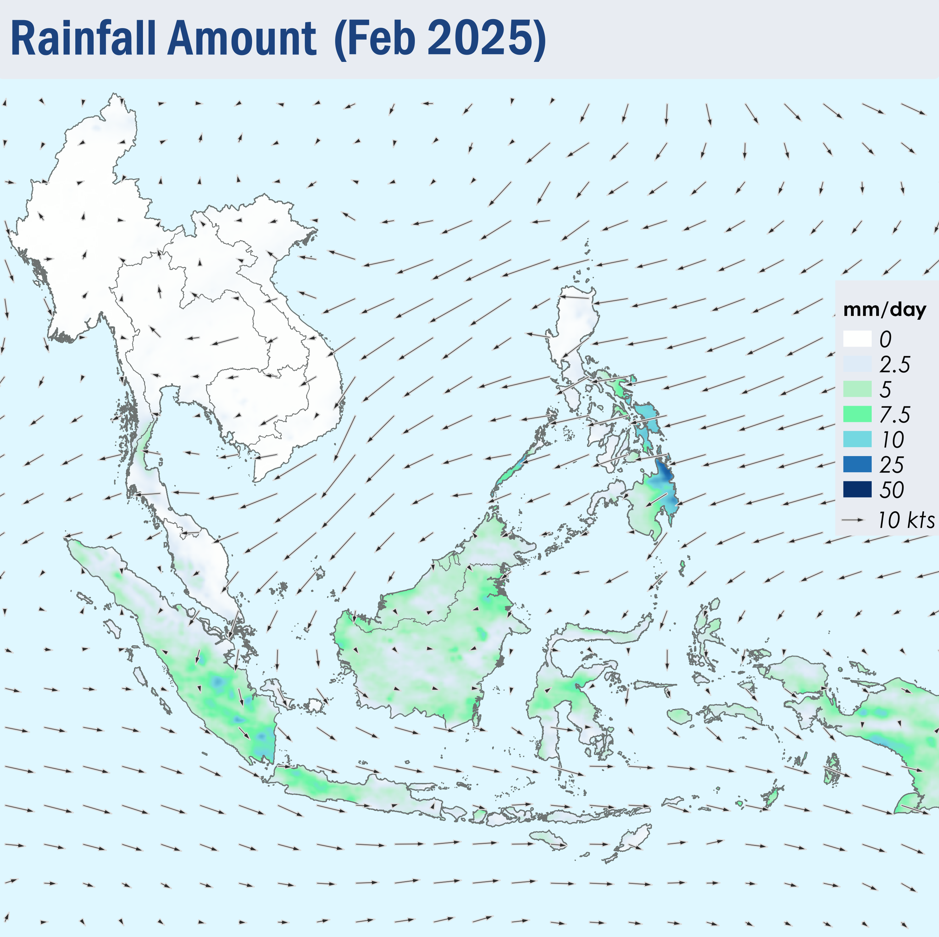
1.1 Northeast monsoon conditions prevailed throughout February 2025. The prevailing low-level winds generally blew from the northeast or east over areas north of the Equator, except over the Mekong sub-region where the prevailing winds were light and variable in direction (Figure 1). Over areas south of the Equator, the prevailing low-level winds blew from the west or northwest which gradually weakened to become light and variable in direction towards the end of the month.
1.2 Dry conditions continued over most areas of the Mekong sub-region and the northern parts of the Philippines. Relatively drier conditions were also observed over some parts of Peninsular Malaysia under the influence of the dry phase of the Northeast Monsoon. Higher rainfall was recorded over the rest of the ASEAN region, particularly over the southern parts of the Philippines and Sumatra where rainfall was more intense (Figure 1). Flooding and landslides were reported over parts of Indonesia and the Philippines, causing infrastructural damage and displacing people from homes.
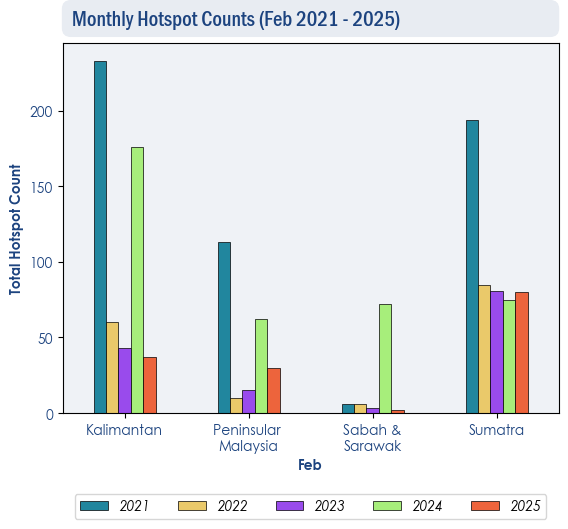
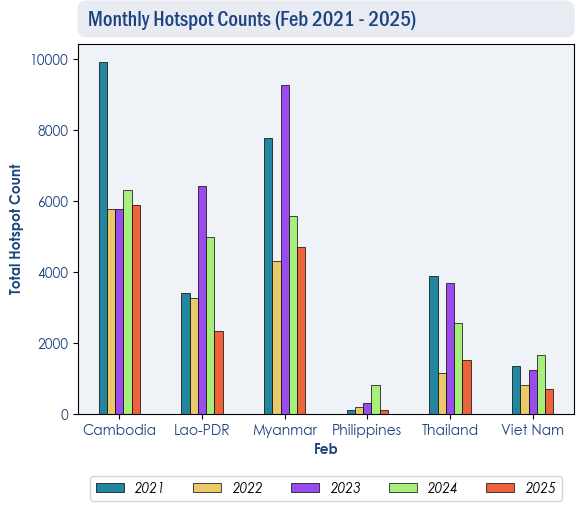
1.3 The overall hotspot counts for the ASEAN region in February 2025 were lower than or comparable to those in the same period in previous years (Figures 2 & 3).
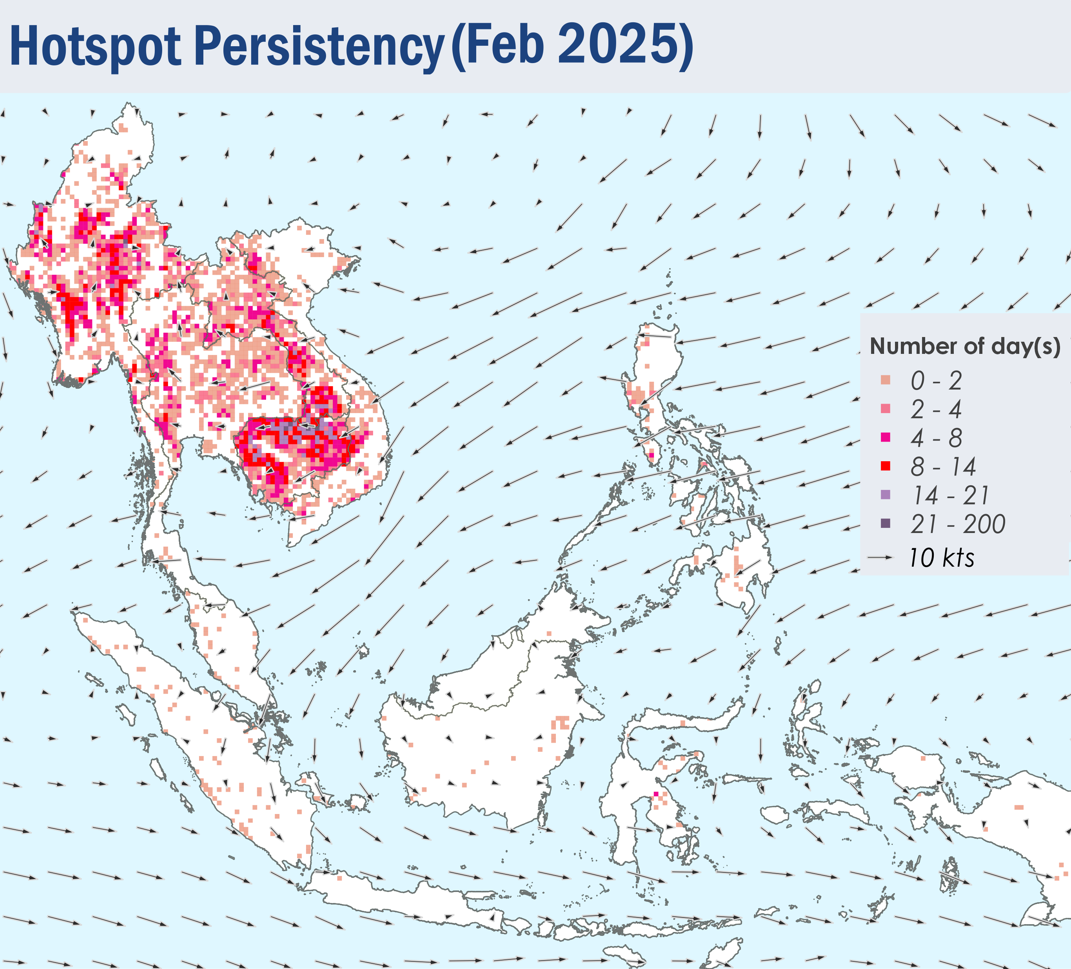
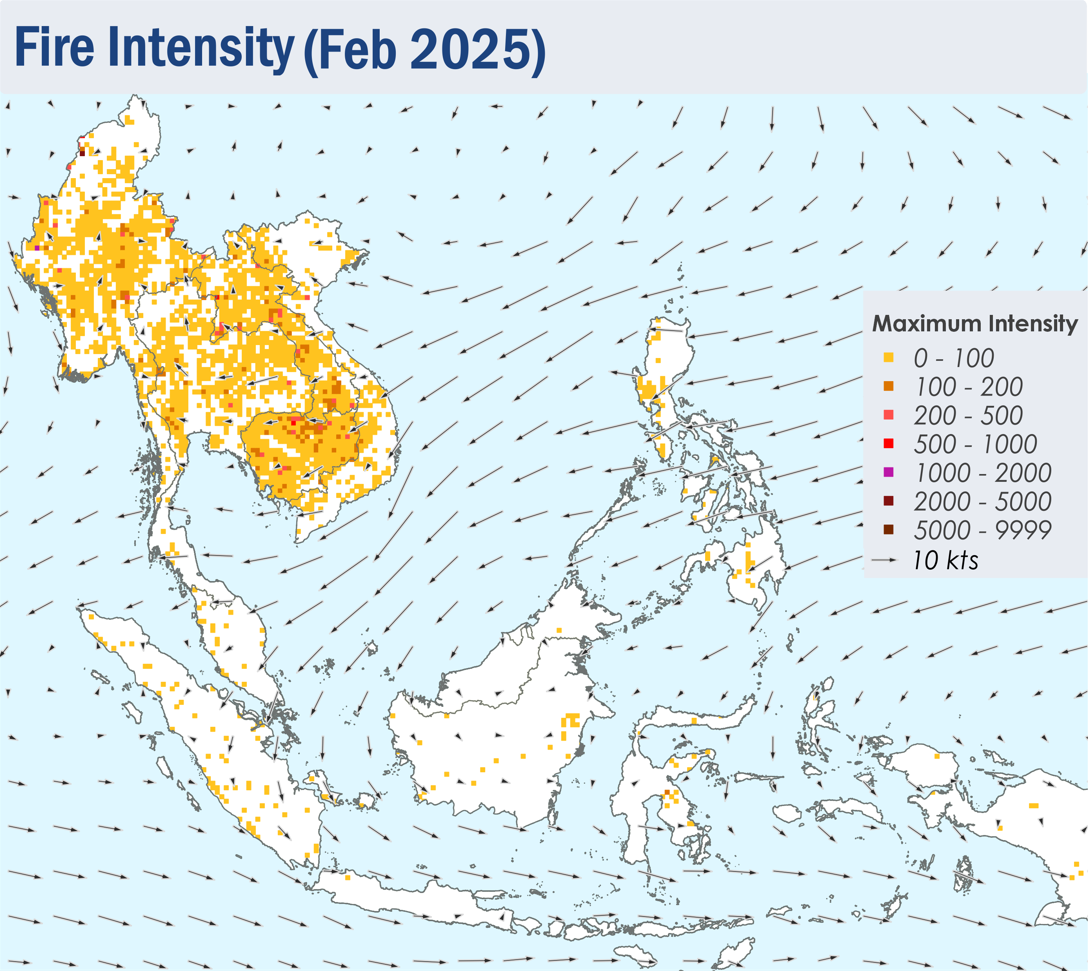
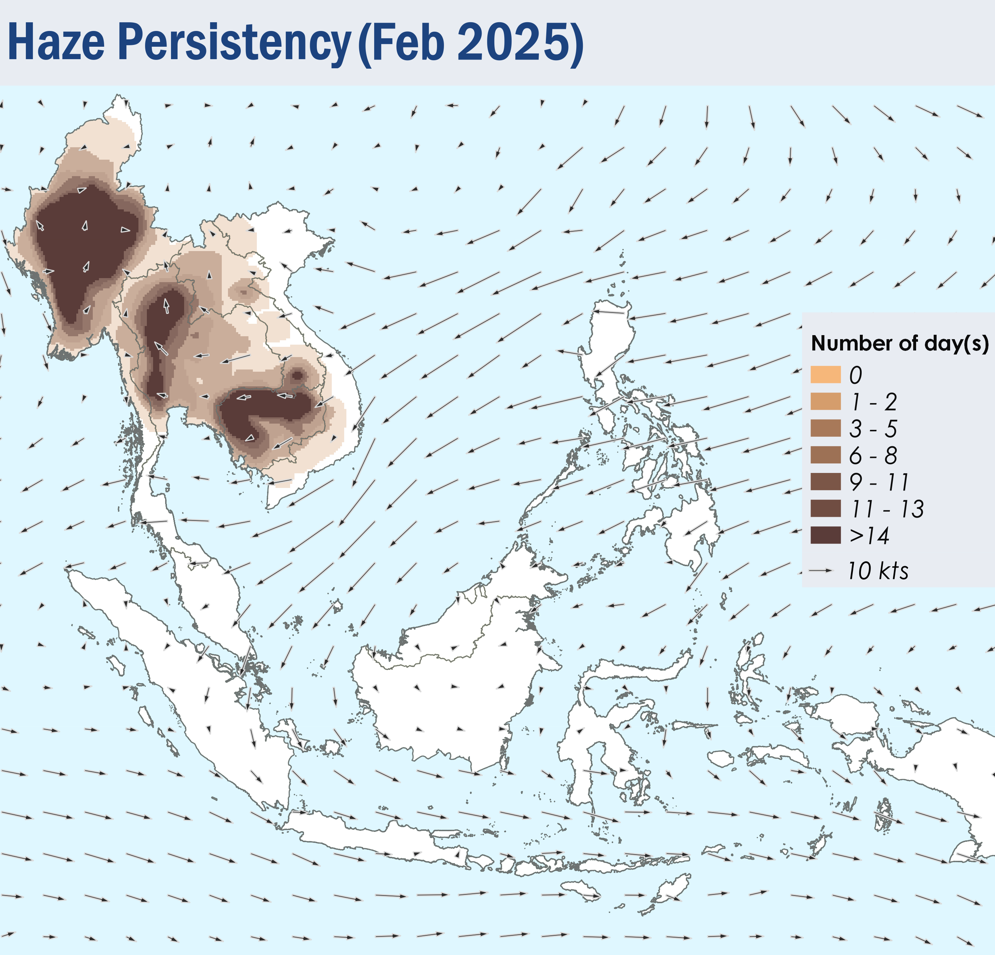
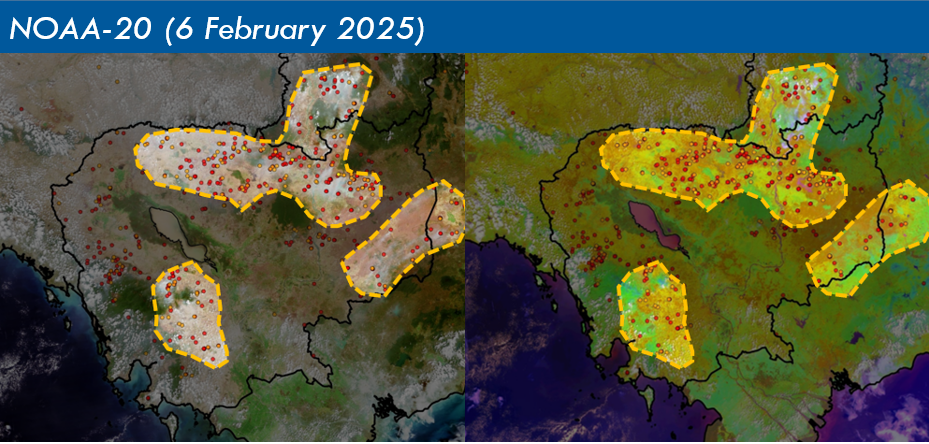
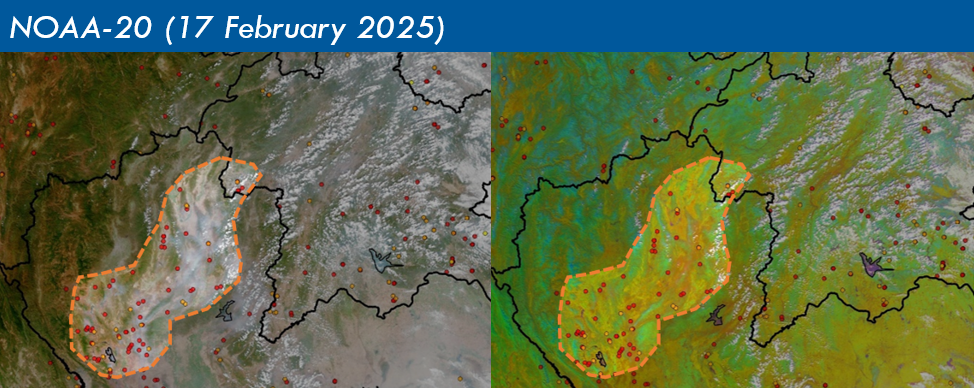
1.4 Scattered to widespread hotspots were detected in the northern and central parts of Myanmar, the central parts of Thailand, the southern parts of Lao PDR, and many parts of Cambodia. Isolated to scattered hotspots were detected elsewhere in the northern ASEAN region (Figure 4). Many hotspots detected in the Mekong sub-region were persistent and intense (Figures 4 & 5). This led to the development of moderate to dense smoke haze over the sub-region, particularly over the southern parts of Lao PDR, the northern and central parts of Thailand as well as most parts of Cambodia and Myanmar where the smoke haze was persistent (Figure 6 & 7). Some of this smoke haze became transboundary due to the prevailing wind conditions (Figure 7). Flight disruptions at airports due to smoke haze were reported in Thailand.
1.5 In the southern ASEAN region, the hotspot and smoke haze situation was generally subdued, with a few hotspots detected in parts of Sumatra, Peninsular Malaysia, Kalimantan and Sulawesi on a few days. Occasional slight localised smoke plumes were observed from hotspots detected in Sumatra.
February 6, 2025
Review of Regional Haze Situation for January 2025
Review of Regional Haze Situation for January 2025
1.1 Northeast Monsoon conditions persisted over the ASEAN region in January 2025. During this month, the prevailing low-level winds over regions north of the Equator blew mostly from the northeast or east, except over the northern parts of the Mekong sub-region, where the winds were light and variable in direction. Meanwhile, the prevailing low-level winds over regions south of the Equator blew mainly from the west or northwest (Figure 1).
1.2 As the dry conditions persisted with a gradually increasing number of hotspots since December 2024, Alert Level 1 for the onset of the dry season for the northern ASEAN region was issued on 2 January 2025. Thereafter, under the persisting dry conditions, the hotspot and smoke haze situation over the Mekong sub-region escalated with a heightened risk of transboundary smoke haze occurrence, and Alert Level 2 for the Mekong sub-region was activated on 20 January 2025. Showers were observed elsewhere in the ASEAN region, except for parts of the northern Philippines where there were brief periods of drier weather (Figure 1).
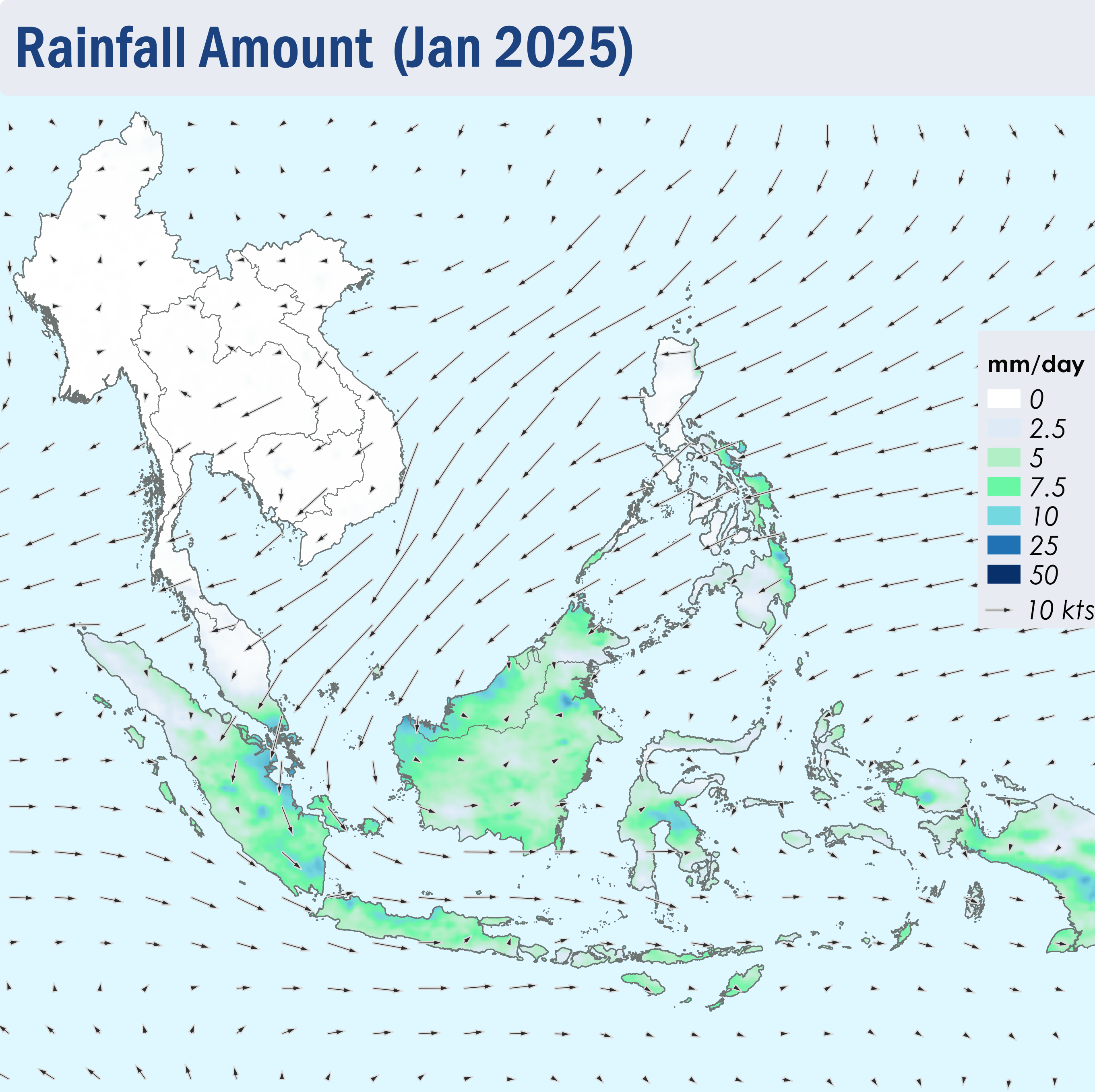
1.3 The overall hotspot counts for the ASEAN region in January 2025 were generally lower than or comparable to hotspot counts recorded for the same period in previous years (Figures 2 and 3).
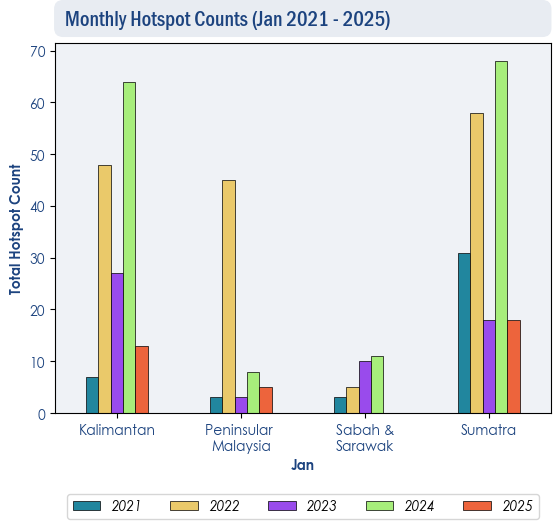
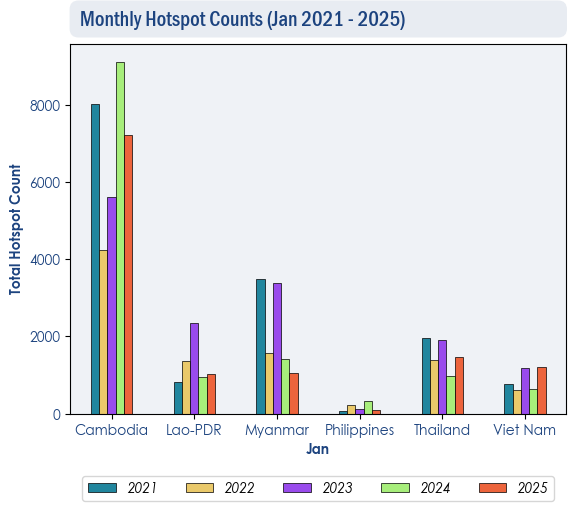
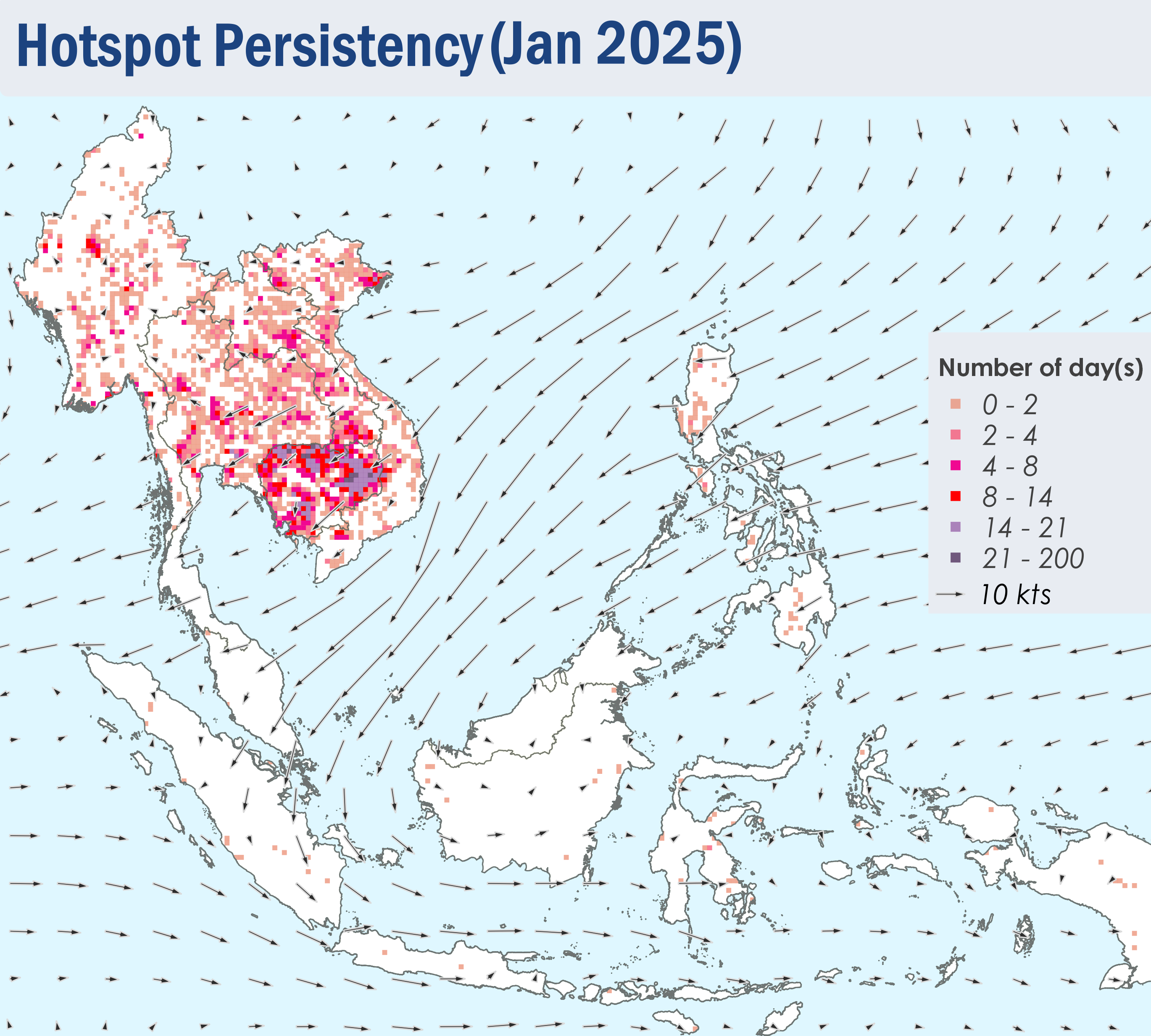
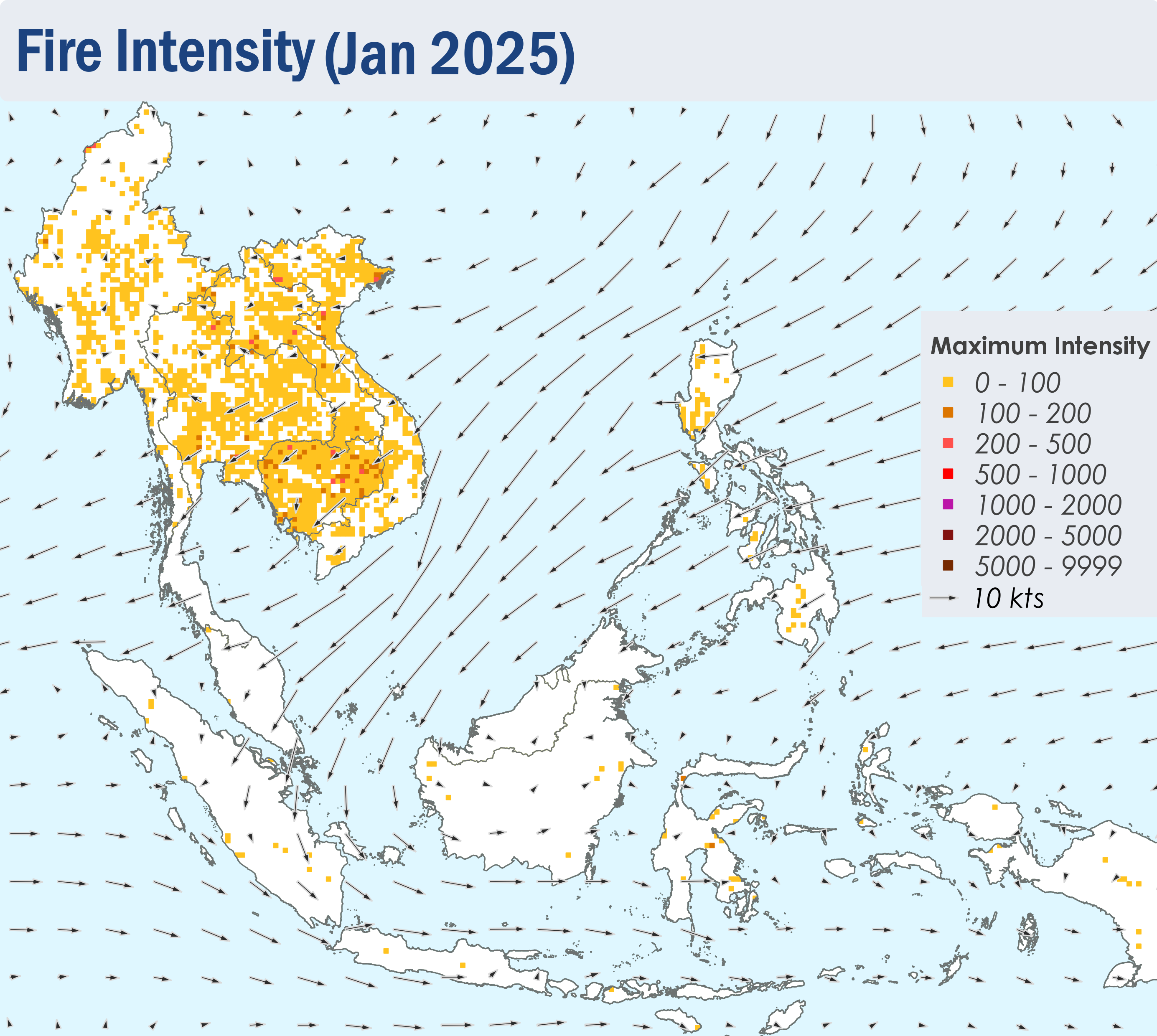
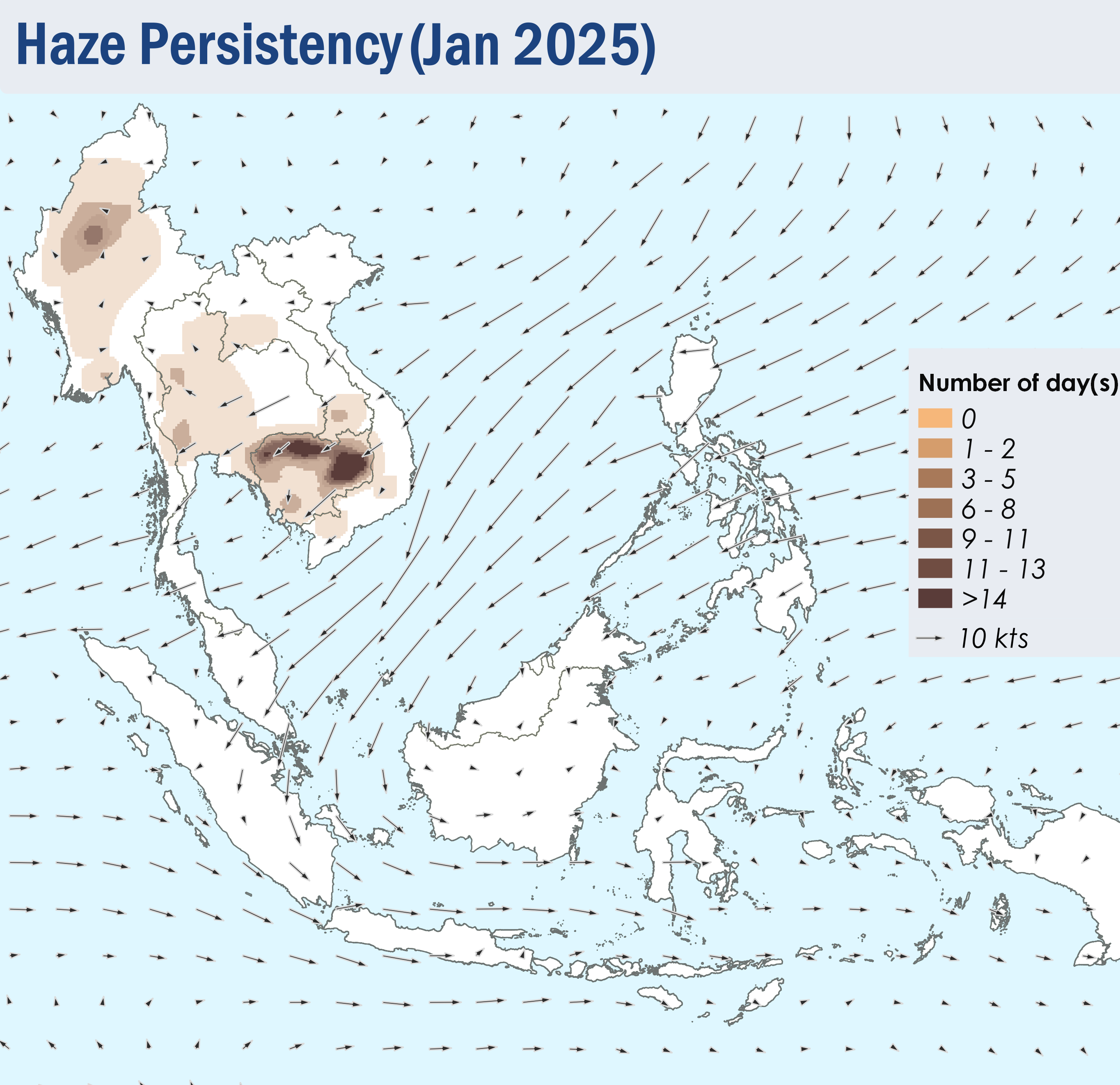
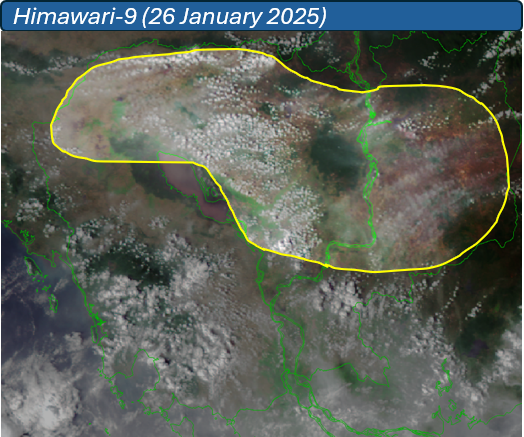
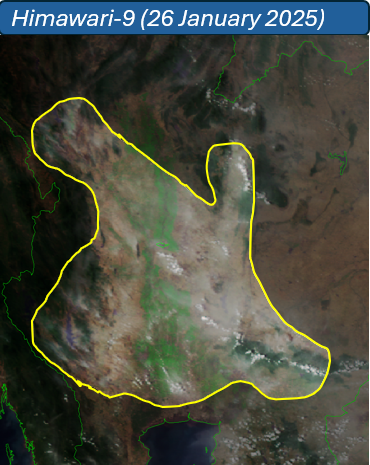
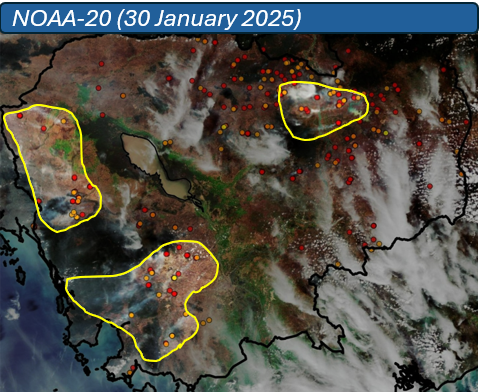
1.4 Isolated to scattered hotspots were detected in the Mekong sub-region (Figure 4) and the Philippines. Persistent clusters of hotspots, some of which were intense, with moderate to dense smoke plumes were observed consistently in many parts of Cambodia and central Thailand (Figures 4, 6, 7, 8 and 9). Moderate smoke haze was also observed in the northern parts of Thailand, most of Myanmar, as well as the northern and southern parts of Lao PDR (Figures 6, 7 and 8). Towards the end of the month, smoke haze emanating from hotspots detected in the western parts of Cambodia was observed drifting westwards into the central parts of Thailand.