Category Archives: events

CR58

June 9, 2026

26th ASEAN COF (May 2026)

Twenty Sixth Session of the ASEAN Climate Outlook Forum (ASEANCOF-26)

image_gallery

19 – 22 May 2026, Online

Consensus Bulletin for June-July-August (JJA) 2026 Season

The ASEAN Climate Outlook Forum (ASEANCOF) is an avenue to collaboratively develop consensus-based seasonal climate outlooks and related information on a regional scale. The forum’s outlook and its activities contribute significantly to one of the key roles of the ASEAN Specialised Meteorological Centre (ASMC), which is to conduct climate and seasonal prediction for the Association of Southeast Asian Nations (ASEAN) region through pooling the expertise of ASEAN National Meteorological and Hydrological Services (NMHSs). In 2021, the ASEANCOF Working Group was established with the goal to guide and support the long-term development of ASEANCOF, in particular regarding the implementation of objective outlooks.

The twenty-sixth session of ASEANCOF (ASEANCOF-26) was organized by the Philippine Atmospheric, Geophysical, and Astronomical Services Administration (PAGASA), Regional Multi-Hazard Early Warning System for Africa and Asia (RIMES), ASMC, the ASEANCOF Working Group, and WMO. This included two prior training sessions: firstly, an introduction to the Seasonal Fundamentals eLearning (pilot version for ASEANCOF) by the UK Met Office; secondly, training and discussion on the Relative Oceanic Niño Index (RONI), by NOAA, Bureau of Meteorology (BoM) Australia, ASMC, and the Meteorological Service Singapore (MSS). During the second training session, participants agreed to adopt RONI alongside other Niño indices for monitoring ENSO in the region.

image_gallery


Conditions and Outlook

Recent sea surface temperature anomalies over the equatorial Pacific Ocean during April-May 2026 overall indicated El Niño–Southern Oscillation (ENSO) neutral conditions were present. However, persistent warming over most of the Niño regions, together with atmospheric indicators such as decreased cloudiness over most parts of Southeast Asia and anomalous low-level westerlies east of the Philippines, supports the development of El Niño-like conditions. Meanwhile, the Indian Ocean remains in a neutral Indian Ocean Dipole (IOD) phase.
International climate outlooks predict a moderate El Niño is likely to develop during June to August (JJA) 2026. After JJA, most models predict continued strengthening into a strong to very strong El Niño, while the rest predict only moderate El Niño conditions to persist through the remainder of the year. If a very strong El Niño occurs, this does not necessarily indicate bigger impacts on Southeast Asia’s climate but rather that typical impacts from El Niño events are more likely to occur. The IOD is also predicted to transition to positive IOD conditions through the latter part of 2026, although with less confidence than the predicted El Niño.
The onset of the 2026 Southwest Monsoon season has been or is expected to be near-average across much of the ASEAN region, except over Viet Nam and the Lao People’s Democratic Republic (PDR), where a later-than-average onset occurred. Overall, the strength of the Southwest Monsoon is predicted to be near or stronger than average over most parts of Southeast Asia.

For JJA 2026, tropical cyclone frequency is predicted to be below- to near-average across the region.

RAINFALL

For the upcoming boreal (Northern Hemisphere) summer season (JJA 2026):

Below-normal rainfall conditions are likely over much of the Maritime Continent, including the southern Philippines, Brunei Darussalam, and Singapore. The exception is over Malaysia, where below- to near-normal or near-normal rainfall is predicted for much of the country, and the central and northern Philippines, where a mix of near- to above-normal rainfall is predicted.
A mix of below- to above-normal rainfall is predicted over mainland Southeast Asia. Below- to near-normal rainfall is predicted over central Thailand, parts of southern Thailand, central Cambodia, and southern Viet Nam. Near-normal rainfall is predicted over the northern half of Myanmar, southern Lao PDR, and mountainous regions of northern Viet Nam and southern Viet Nam. Above-normal rainfall is predicted over coastal and southern Myanmar and parts of northern Lao PDR, with near- to above-normal rainfall over parts of northern Thailand, Cambodia, and Viet Nam.

TEMPERATURE

For the upcoming boreal (Northern Hemisphere) summer season (JJA 2026):

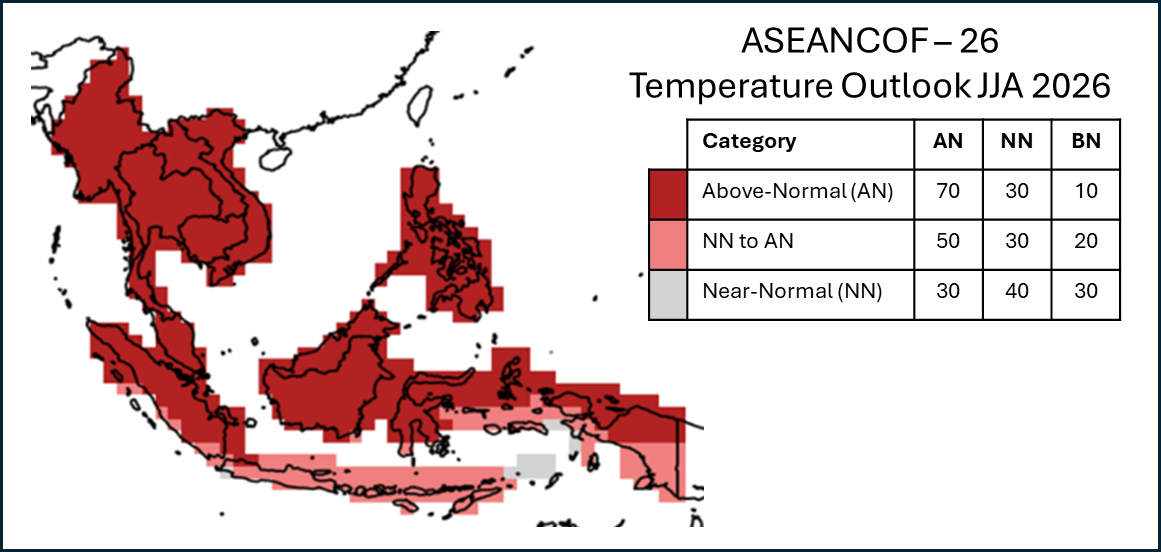
Above-normal temperatures are expected across most parts of Southeast Asia. The exception is over the southern Maritime Continent and parts of northern Viet Nam and northern, southern, and coastal Myanmar, where near- to above-normal temperatures are predicted.

1For this outlook, near-to above-normal temperature corresponds to 50% probability of above-normal temperature, 40% near-normal, and 10% below-normal. Further information is in the consensus maps.

Refer to Annex A for reference on what is meant by “above, near, or below normal” in the outlook. For more information on the boreal (Northern Hemisphere) summer monsoon outlook and further updates on the national scale, the relevant NMHSs should be consulted (see Annex B).

CONSENSUS MAPS FOR JJA 2026

The following maps provide the probabilistic outlooks for the JJA 2026 season in terms of tercile categories of “Above Normal” (AN: upper tercile), “Near Normal” (NN: middle tercile), and “Below Normal” (BN: lower tercile).

PROBABILISTIC RAINFALL OUTLOOK
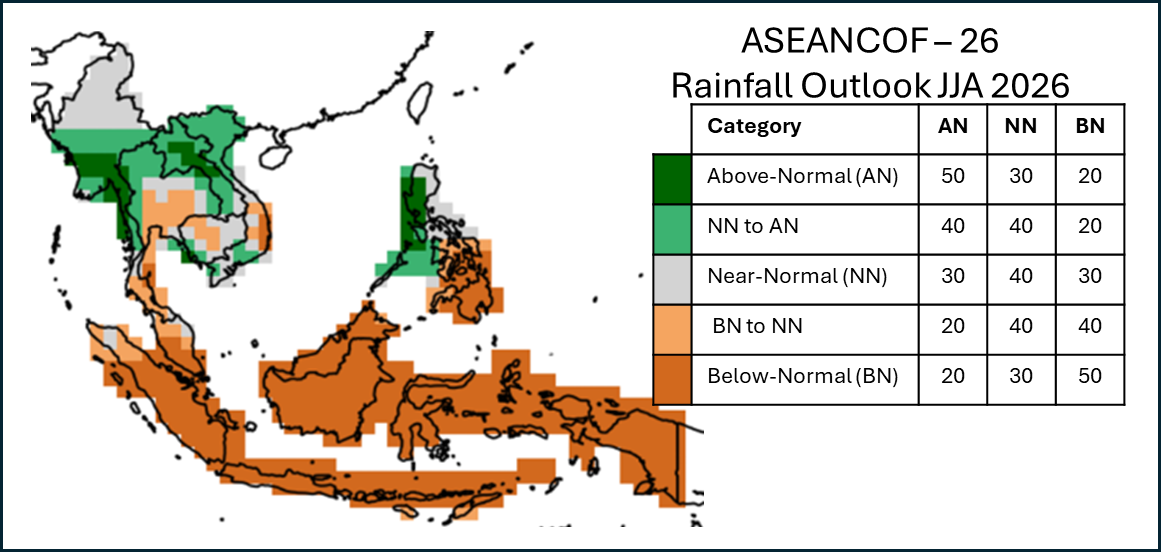
image007

PROBABILISTIC TEMPERATURE OUTLOOK

image008

Meeting Documents

ASEANCOF-26 Outlook Bulletin

Acknowledgements

ASEANCOF-26 would like to express appreciation to the NMHSs of the ASEAN Member States for sharing their national level forecasts, the Global Producing Centres (GPCs: Japan Meteorological Administration (JMA), NOAA, BoM, China Meteorological Administration (CMA), European Centre for Medium-range Weather Forecasts (ECMWF), UK Met Office, APEC Climate Centre (APCC)), the Southeast Asia Regional Climate Centre (SEA-RCC)-Network, RIMES, UN ESCAP, FAO, and other partners of ASEANCOF for sharing their products and expertise, and the WMO Regional Office in Asia and the Pacific (RAP) for their continued support of ASEANCOF. The forum would also like to thank PAGASA for hosting and facilitating the online forum.
May 14, 2026

Fourth Workshop on ASEAN Regional Climate Data, Analysis and Projections (ARCDAP-4)

Fourth Workshop on ASEAN Regional Climate Data, Analysis and Projections (ARCDAP-4)

The ASEAN Regional Climate Data, Analysis and Projection (ARCDAP) workshop series is an initiative led by the ASEAN Specialised Meteorological Centre (ASMC) and delivered by the Centre for Climate Research Singapore (CCRS) under the Meteorological Service Singapore (MSS). The series began in 2018 following a proposal from the World Meteorological Organization (WMO) Regional Association V Working Group on Climate Service (WG-CLS), which called for stronger regional collaboration within ASEAN to improve the development of regional and national climate change projections.

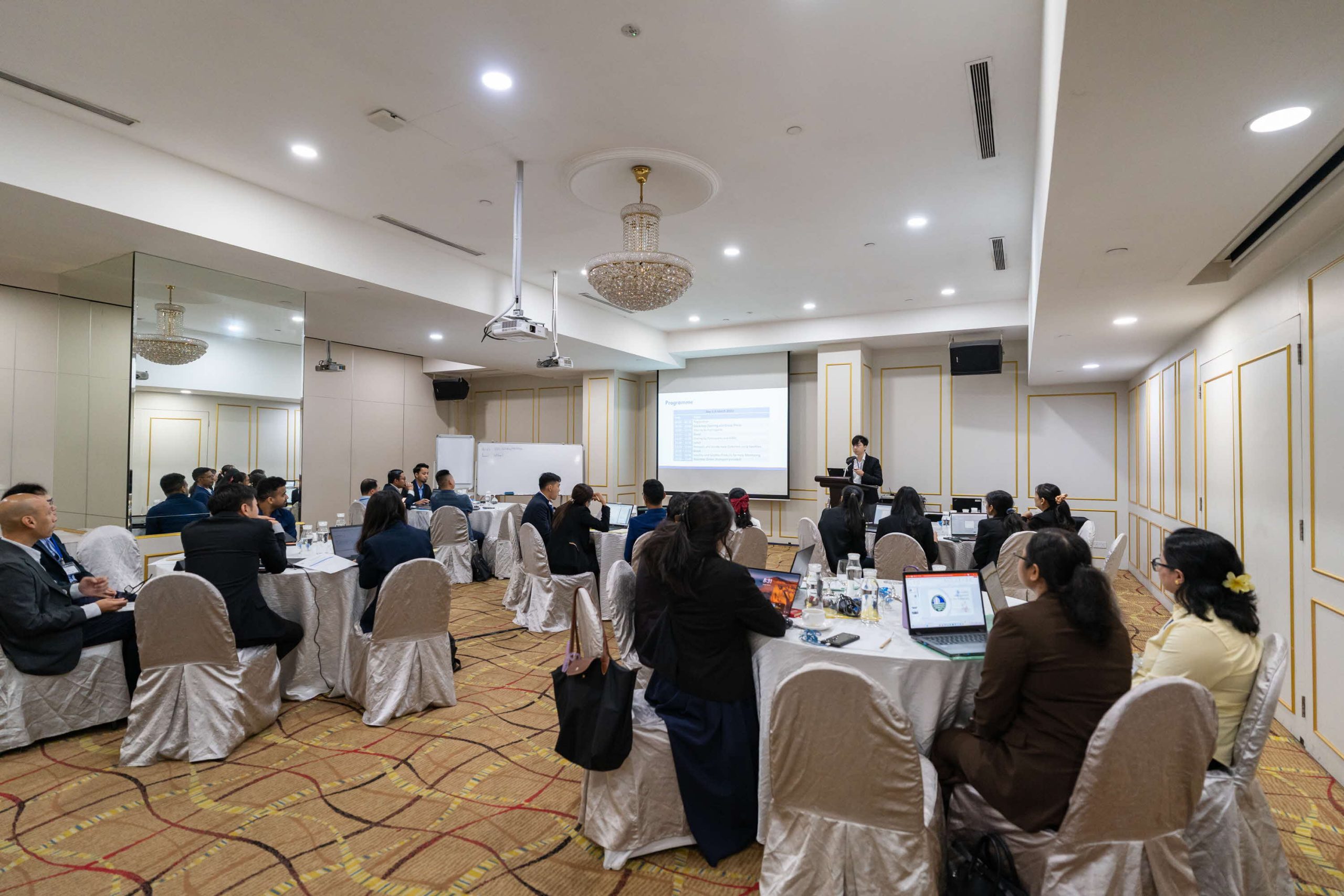
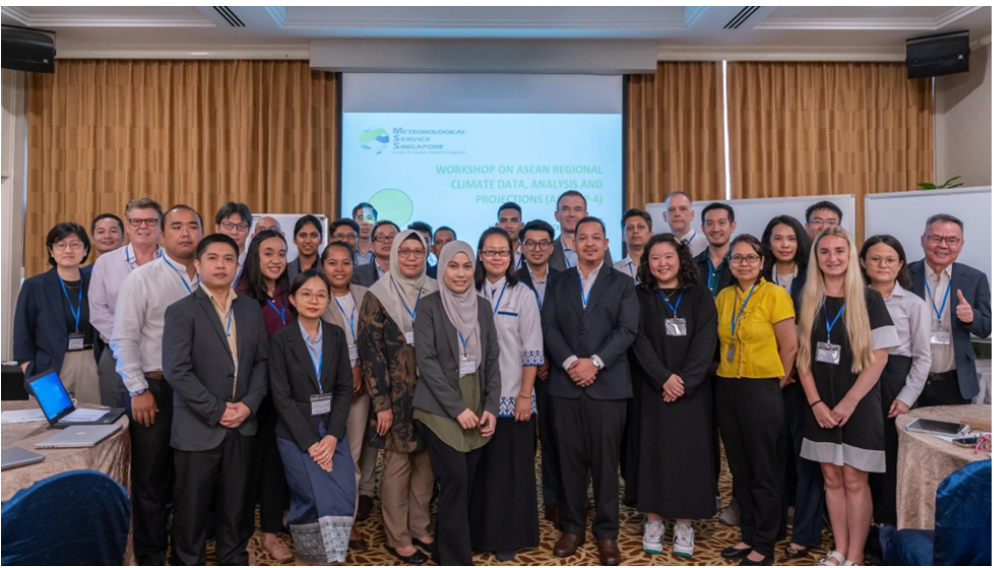
ARCDAP-4 was held in person in Singapore from 21 to 24 April 2025. The workshop brought together 40 participants from ASEAN National Meteorological and Hydrological Services (NMHSs), regional research institutions, international climate experts, and sectoral specialists working on climate change impacts (Figure 1). The workshop centred on the theme, “Applications of High-resolution regional climate change projections for Southeast Asia climate impact studies.”

The ARCDAP-4 workshop was designed to strengthen regional understanding and capacity in the use of high-resolution climate information for Southeast Asia. Its key objectives were to consolidate knowledge of the current status of high-resolution regional climate projections for the region, including initiatives such as CORDEX-SEA and Singapore’s Third National Climate Change Study (V3), and to support climate change impact studies by improving participants’ understanding and application of climate projection data. The workshop also aimed to deepen understanding of climate impact metrics, strengthen regional collaboration and capacity-building around observational datasets, climate projections, and impact assessments, and provide practical training on CCRS’s V3 Data Visualization Portal (DVP) and V3 Data Sharing Portal (DSP). In addition, it sought to develop a set of recommendations for the use of high-resolution regional climate projections in sectoral climate change impact studies.

Figure 1: Group photograph of ASMC staff and participants of the 2026 H2A workshop.
Figure 1: ARCDAP-4 participants’ group photo taken on Day 1.

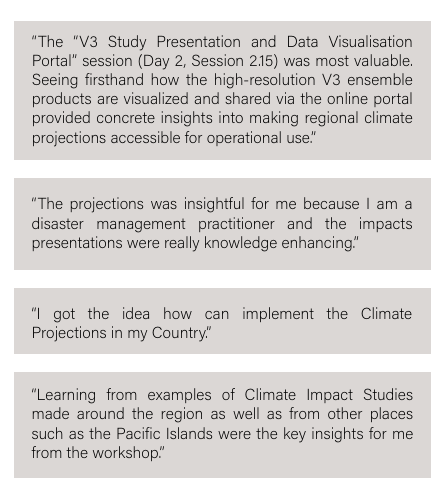
The post-workshop survey results showed that all participants ranked the workshop organisation from Very good to Excellent. When asked to rank the question, “How relevant was the workshop content to your professional work in climate science, service, or policy?”, all participants indicated either Relevant (38.5%) or Very Relevant (61.5%). Overall, the participants are satisfied with the workshop format, content, presentations, and various themed sessions and group activities. All participants also expressed interest in attending ARCDAP-5 if it’s planned.

Figure 1:

Workshop report

ARCDAP-4 report

Related Article

BAMS Meeting Summary

April 9, 2026

Hotspot and Haze Assessment (H2A) Workshop 2026 for the ASEAN Region, Singapore 3 – 5 March 2026

Hotspot and Haze Assessment (H2A) Workshop 2026 for the ASEAN Region, Singapore 3 – 5 March 2026

ASMC hosted the annual Hotspot and Haze Assessment (H2A) workshop for the Southeast Asia region during 3 – 5 March 2026. The three-day event brought together 17 participants representing 8 ASEAN Member States (AMS) and the ASEAN Secretariat. The workshop is part of the ASMC’s Capability-building Programme (ACaP), which aims to strengthen regional expertise in weather forecasting, hotspot and haze surveillance, subseasonal-to-seasonal prediction methods, and climate projection analysis.

The programme facilitated knowledge sharing among environmental and meteorological professionals from various AMS, who presented their national approaches to fire prevention and mitigation strategies during the dry season. ASMC staff conducted training lectures and practical hands-on sessions related to satellite technology applications for fire detection and smoke haze monitoring. Participants also learned about Southeast Asia’s weather and climatic characteristics and how to interpret subseasonal and seasonal outlooks . The workshop also showcased the WMO Information System (WIS) 2.0 for data dissemination, ASMC’s ASEAN-wide burned area mapping product, and smoke haze dispersion modelling capabilities.

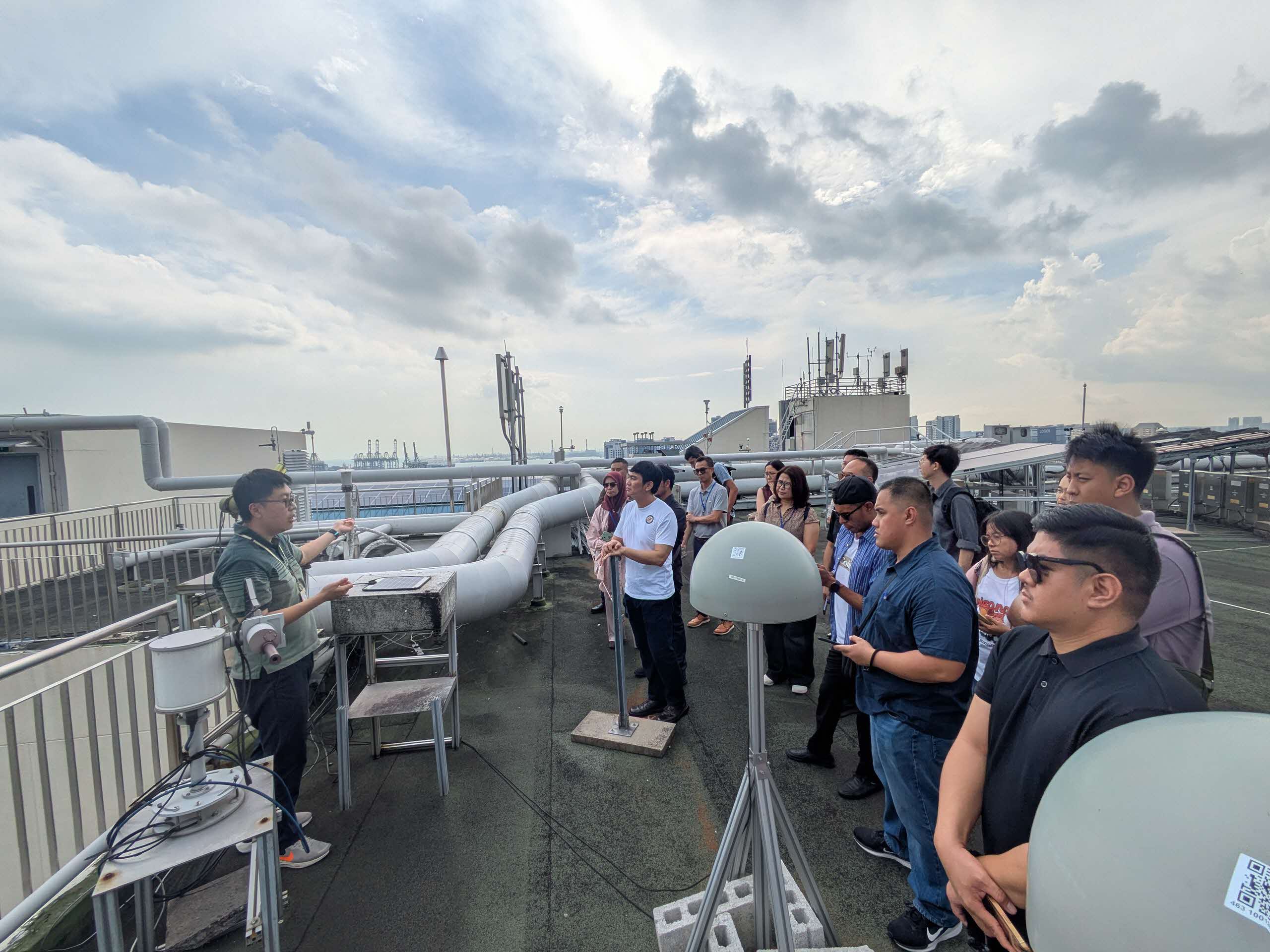
Participants had the opportunity to visit the Centre for Remote Imaging, Sensing and Processing (CRISP), which researches applications of remote sensing technology. CRISP researchers were invited to share on their remote sensing research initiatives and practical applications. Workshop participants had the opportunity to visit CRISP’s facilities which included satellite reception systems and air quality monitoring instruments such as PANDORA and AERONET systems. This site visit demonstrated how CRISP utilises these technologies to support haze detection and air quality surveillance activities.

The workshop created a valuable platform for knowledge exchange and professional networking among participants and instructors, connecting regional specialists engaged in fire monitoring, haze assessment, and environmental management activities.

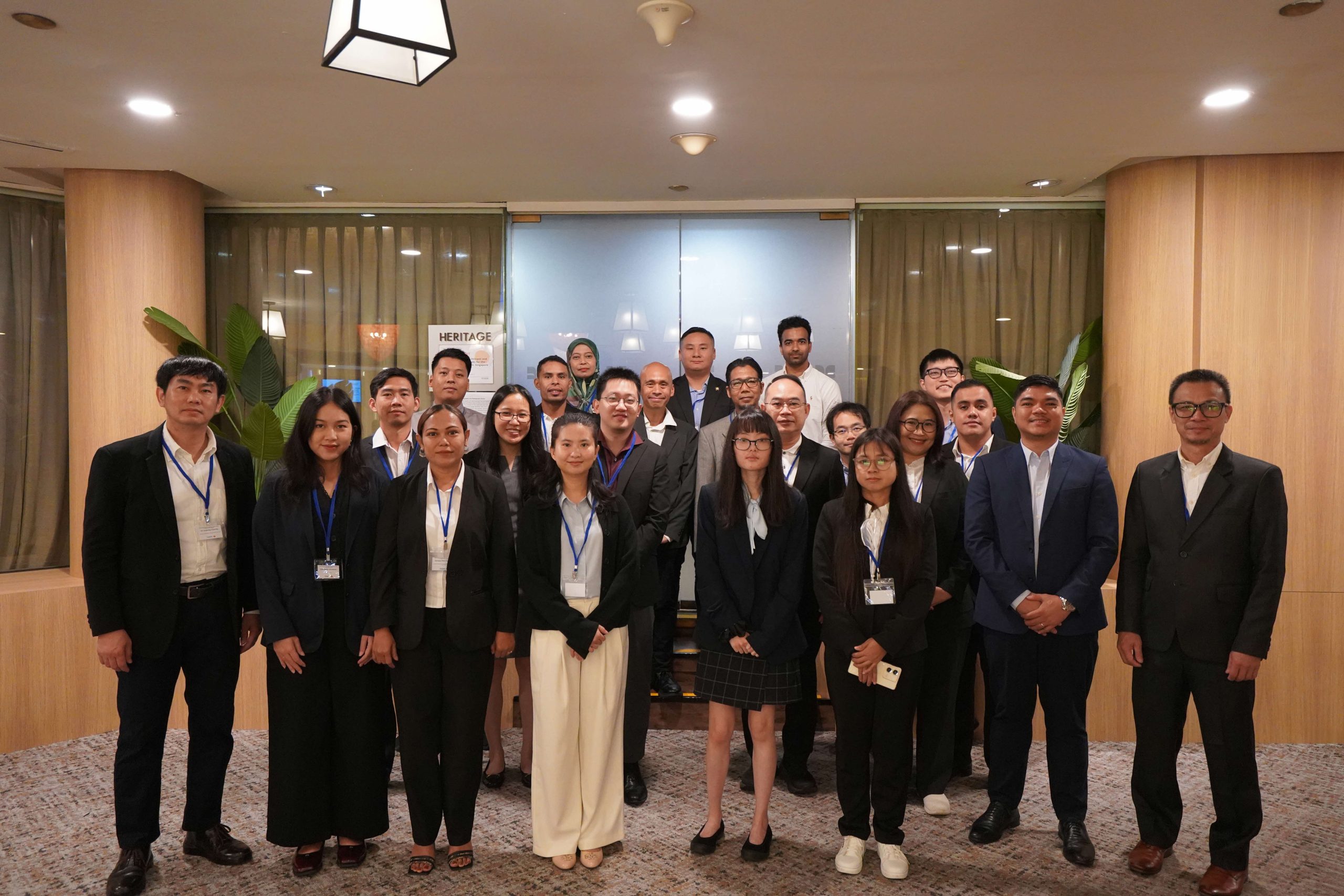
Figure 1: Group photograph of ASMC staff and participants of the 2026 H2A workshop.

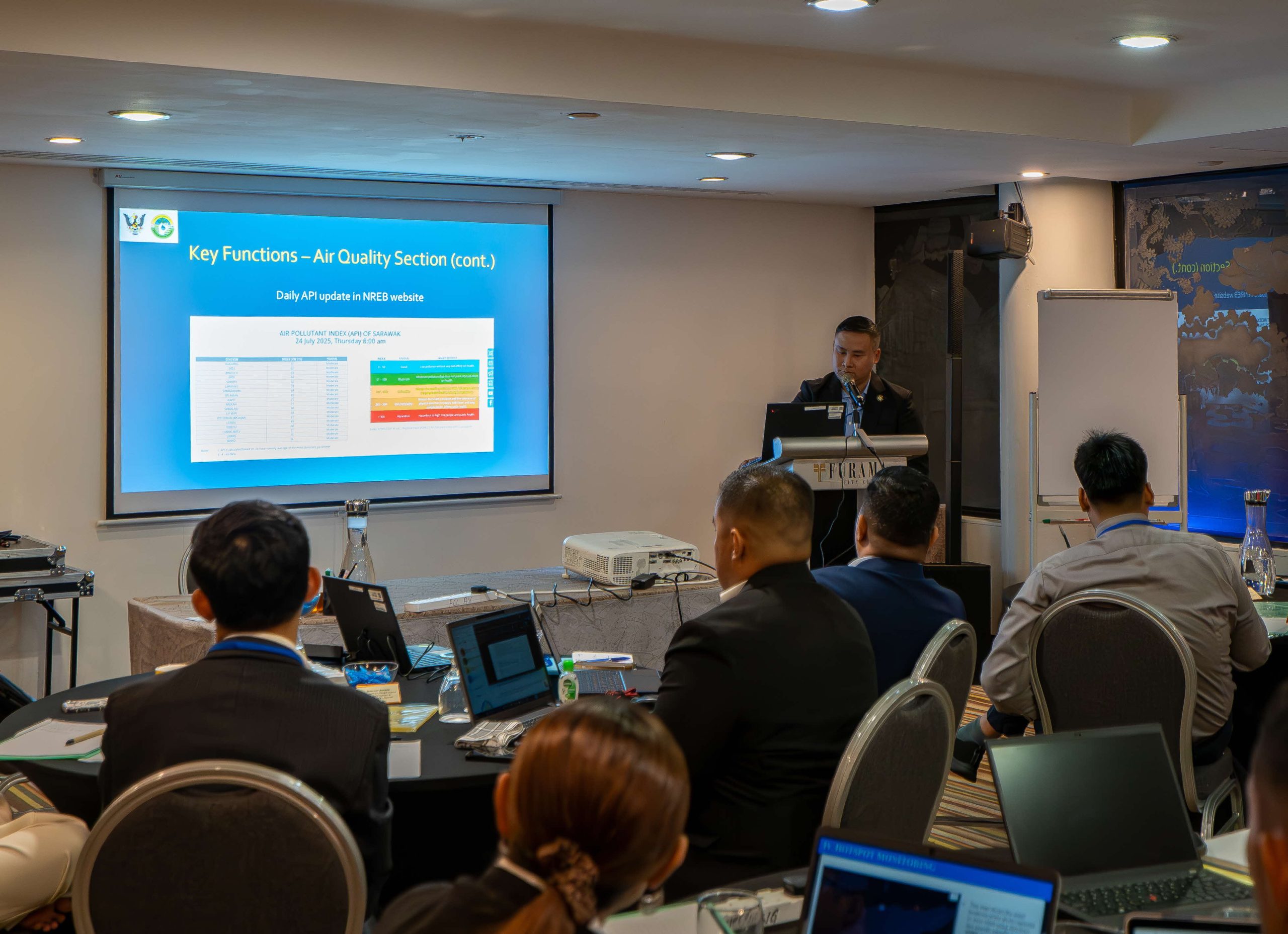
Figure 2: Participants’ sharing of local experience on fire and haze in their countries.

Figure 3: CRISP staff giving the participants a tour of their facilities.

Figure 4: ASMC staff and participants at a welcome dinner.

November 12, 2025

25th ASEAN COF (October 2025)

Twenty Fifth Session of the ASEAN Climate Outlook Forum (ASEANCOF-25)

image_gallery

27 – 30 October 2025, Online

Consensus Bulletin for December-January-February (DJF) 2025/2026 Season

The ASEAN Climate Outlook Forum (ASEANCOF) is an avenue to collaboratively develop consensus-based seasonal climate outlooks and related information on a regional scale. The forum’s outlook and its activities contribute significantly to one of the key roles of the ASEAN Specialised Meteorological Centre (ASMC), which is to conduct climate and seasonal prediction for the Association of Southeast Asian Nations (ASEAN) region through pooling the expertise of ASEAN National Meteorological and Hydrological Services (NMHSs). In 2021, the ASEANCOF Working Group was established with the goal to guide and support the long-term development of ASEANCOF, in particular regarding the implementation of objective outlooks.

The Twenty-fifth session of ASEANCOF (ASEANCOF-25) was organised by the Ministry of Water Resources and Meteorology, Cambodia (MOWRAM), RIMES, ASMC, the ASEANCOF Working Group, UN ESCAP, and WMO. Participants from the NMHSs of ASEAN Member States created a consensus forecast for the boreal winter monsoon 2025/2026 in the ASEAN region. The consensus for the December-January-February (DJF) 2025/2026 outlook was achieved through an online session, which included presentations from different NMHSs, questionnaires, and discussions regarding the current climate conditions and predictions for Southeast Asia. The theme of ASEANCOF-25 was on advancing the tailoring of climate services to better meet the diverse needs of users across the ASEAN region. On the last day of ASEANCOF-25, a sharing session was held which included a panel discussion on the various uses of climate services.

image_gallery


Conditions and Outlook

Recent (September – October 2025) sea surface temperatures (SSTs) were below-average across the central and eastern equatorial Pacific Ocean and, along with atmospheric indicators such as stronger trade winds and increased cloudiness in the western Pacific, indicate La Niña or La Niña-like conditions. In the Indian Ocean, a negative Indian Ocean Dipole is present.
International climate outlooks predict weak or moderate La Niña conditions for December 2025 to February 2026. After DJF 2025/2026, most models indicate a transition from La Niña to ENSO-neutral conditions, although there remains a possibility that La Niña may persist beyond early 2026. The Indian Ocean Dipole (IOD) is likely to return to neutral during December 2025.
The onset of the 2025/2026 Northeast monsoon season has been or is expected to be near- or later than average for much of the northern ASEAN region. The onset for much of the southern ASEAN region is predicted to be near-average. The strength of the Northeast Monsoon is predicted to be near-average over most of Southeast Asia.

During DJF 2025/2026, tropical cyclone frequency is predicted to be above average around the Philippine Sea, and near-average for the Bay of Bengal, and South China Sea.

RAINFALL

For the upcoming boreal (Northern Hemisphere) winter season (DJF 2025/2026):

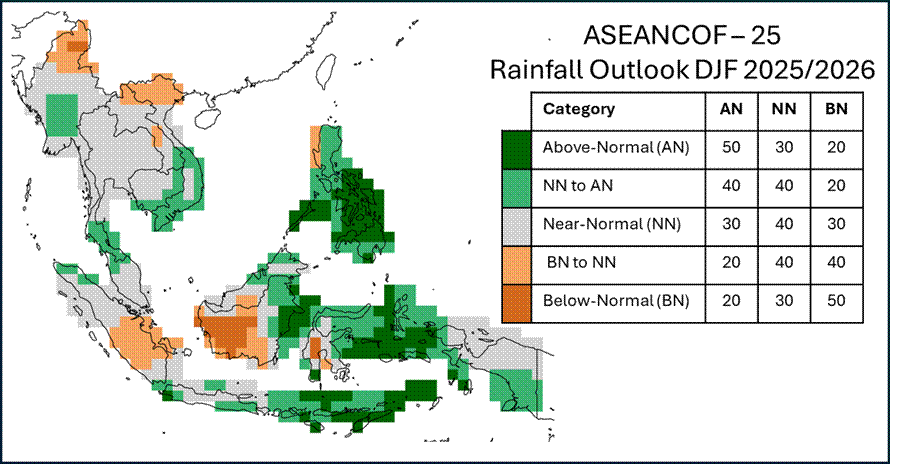
Over the Maritime Continent, near- to above-normal or above-normal rainfall is predicted for much of the eastern half of the region, including most of the Philippines, Brunei Darussalam, Sabah, and Timor-Leste. One exception is over the northwestern Philippines where below- to near-normal rainfall is predicted. For the western half, most of the region is predicted to experience either below- to near-normal or near-normal rainfall, including near-normal rainfall over Singapore, Peninsular Malaysia, and parts of East Malaysia.

Across Mainland Southeast Asia, near- to above-normal rainfall is predicted over parts of southern Mainland Southeast Asia, including southern Thailand, southern and eastern Cambodia, southern Viet Nam, as well as central Myanmar. Near- to below-normal rainfall is predicted over northern parts, including northern Myanmar, Lao PDR, and Viet Nam. Elsewhere, near-normal rainfall is predicted.

TEMPERATURE

For the upcoming boreal (Northern Hemisphere) winter season (DJF 2025/2026):

Over the Maritime Continent, near-to above-normal or above-normal temperature is predicted, apart from over the northern Philippines where near-normal temperature is predicted.

Over Mainland Southeast Asia, most of the region is predicted to experience near-normal temperature, apart from northern Myanmar, northern Thailand, central and southern Lao PDR, and most of Cambodia where near-to above-normal or above-normal temperature is predicted.

1For this outlook, near-to above-normal temperature corresponds to 50% probability of above-normal temperature, 40% near-normal, and 10% below-normal. Further information is in the consensus maps.

Refer to Annex A for reference on what is meant by “above, near, or below normal” in the outlook. For more information on the boreal (Northern Hemisphere) summer monsoon outlook and further updates on the national scale, the relevant NMHSs should be consulted (see Annex B).

CONSENSUS MAPS FOR DJF 2025/2026

The following maps provide the probabilistic outlooks for DJF 2025/2026 season in terms of tercile categories of “Above Normal” (AN: upper tercile), “Near Normal (NN: middle tercile) and “Below Normal” (BN: lower tercile).

PROBABILISTIC RAINFALL OUTLOOK

image007

PROBABILISTIC TEMPERATURE OUTLOOK

image008

Meeting Documents

ASEANCOF-25 Outlook Bulletin

Acknowledgements

ASEANCOF would like to convey its appreciation to the NMHSs of the ASEAN Member States for sharing their national level forecasts, the Global Producing Centres, the Southeast Asia Regional Climate Centre – Network, RIMES, UN ESCAP, FAO, USQ, GHHIN Southeast Asia Hub and other partners of ASEANCOF for sharing their products and expertise, and the World Meteorological Organization Regional Office in Asia and the Southwest Pacific (WMO-RAP) for their continued support of ASEANCOF. The Forum would also like to thank MOWRAM Cambodia for hosting the forum, with support from RIMES, CREWS and WISER Asia Pacific for the funding support provided for the meeting.

May 9, 2025

24th ASEAN COF (April 2025)

Twenty Fourth Session of the ASEAN Climate Outlook Forum (ASEANCOF-24)

image_gallery

22 – 25 April 2025, MOWRAM Cambodia

Consensus Bulletin for June-July-August (JJA) 2025 Season

The ASEAN Climate Outlook Forum (ASEANCOF) is an avenue to collaboratively develop consensus-based seasonal climate outlooks and related information on a regional scale. The forum’s outlook and its activities contribute significantly to one of the key roles of the ASEAN Specialised Meteorological Centre (ASMC), which is to conduct climate and seasonal prediction for the Association of Southeast Asian Nations (ASEAN) region through pooling the expertise of ASEAN National Meteorological and Hydrological Services (NMHSs). In 2021, the ASEANCOF Working Group was established with the goal to guide and support the long-term development of ASEANCOF, in particular with regard to the implementation of objective outlooks.

The Twenty-Fourth session of ASEANCOF (ASEANCOF-24) was organised by the Ministry of Water Resources and Meteorology, Cambodia (MOWRAM), RIMES, ASMC, the ASEANCOF Working Group, and WMO. A two-day training workshop occurred prior to the COF proper, with training by the UK Met Office, ASMC, and University of Southern Queensland (22 – 23 April).

During the COF proper, participants from the NMHSs of ASEAN Member States created a consensus forecast for the boreal summer monsoon 2025 in the ASEAN region. The consensus for the June-July-August (JJA) 2025 outlook was achieved through a hybrid session, which included presentations from NMHSs, questionnaires, and discussions regarding the current climate conditions and predictions for Southeast Asia. The theme of ASEANCOF-24 was Climate Services and Heat Health. On the last day of ASEANCOF-24, a sharing session was held by the Global Heat Health Information Network (GHHIN) Southeast Asia Hub, followed by a general sharing session by various sector representatives and producers, including UN ESCAP, FAO, and agricultural and health representatives from Lao PDR and Cambodia. A recording of the COF proper is available at https://community.wmo.int/en/meetings/24th-association-southeast-asian-nations-asean-climate-outlook-forum-aseancof-24.

image_gallery


Conditions and Outlook

Recent analysis of sea surface temperature (SST) anomalies over the equatorial Pacific shows average to slightly below-average SSTs across the equatorial Pacific Ocean, and along with atmospheric indicators such as trade wind strength and cloudiness, indicate ENSO-neutral conditions. In the Indian Ocean, the Indian Ocean Dipole (IOD) is neutral.
The international climate outlook predicts that ENSO-neutral conditions will continue into JJA 2025. After JJA 2025, most models predict ENSO-neutral conditions, although there is still a high amount of uncertainty for ENSO predictions issued in April.

The Indian Ocean Dipole (IOD) is also predicted to be neutral during JJA 2025.

The onset of the Southwest monsoon season is predicted to be near average for most of Southeast Asia in 2025, starting from May. The strength of the Southwest monsoon is predicted to be near-average over most of Southeast Asia, based on model predictions.

During JJA 2025, tropical cyclone frequency is predicted to be near average around the Philippine Sea and the South China Sea and above average over the Bay of Bengal.

RAINFALL

For the upcoming boreal (Northern Hemisphere) summer season (JJA 2025):
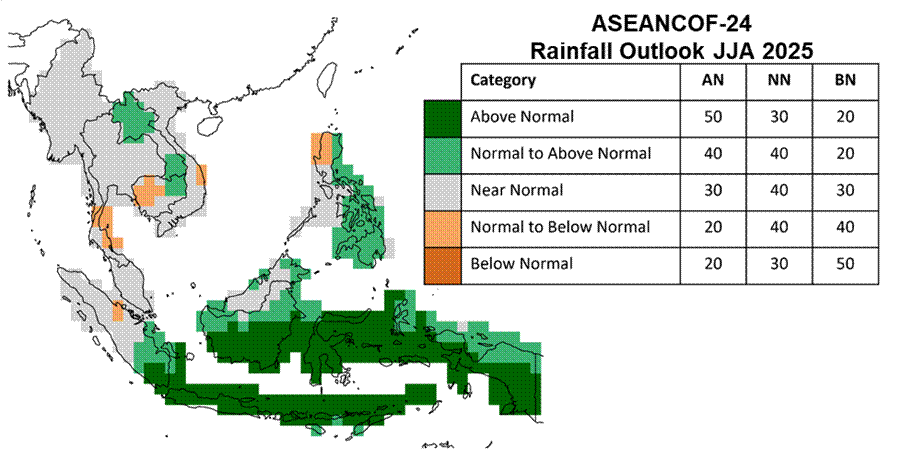
Above-normal rainfall is predicted over parts of the southern ASEAN region. Near- to above-normal rainfall is predicted over eastern and southern Philippines, parts of east Malaysia, Brunei Darussalam, northeastern Cambodia, and northern and southern Lao PDR.

Below- to near-normal rainfall is predicted over parts of southern Thailand, northwestern Cambodia, coastal central Vietnam and northwestern Philippines.

Elsewhere, near-normal rainfall is predicted.

TEMPERATURE

For the upcoming boreal (Northern Hemisphere) summer season (JJA 2025):
Above-normal temperature is predicted over much of the equatorial region, as well as over eastern and southern Philippines and parts of northern Viet Nam and northwestern Cambodia.

Elsewhere, near- to above-normal1 temperature is predicted.

1For this outlook, near-to above-normal temperature corresponds to 50% probability of above-normal temperature, 40% near-normal, and 10% below-normal. Further information is in the consensus maps.

Refer to Annex A for reference on what is meant by “above, near, or below normal” in the outlook. For more information on the boreal (Northern Hemisphere) summer monsoon outlook and further updates on the national scale, the relevant NMHSs should be consulted (see Annex B).

CONSENSUS MAPS FOR JJA 2025

The following maps provide the probabilistic outlooks for JJA 2025 season in terms of tercile categories of “Above Normal” (AN: upper tercile), “Near Normal (NN: middle tercile) and “Below Normal” (BN: lower tercile).

PROBABILISTIC RAINFALL OUTLOOK

image007

PROBABILISTIC TEMPERATURE OUTLOOK

image008

Meeting Documents

ASEANCOF-24 Outlook Bulletin

Acknowledgements

ASEANCOF would like to convey its appreciation to the NMHSs of the ASEAN Member States for sharing their national level forecasts, the Global Producing Centres, the Southeast Asia Regional Climate Centre – Network, RIMES, UN ESCAP, FAO, USQ, GHHIN Southeast Asia Hub and other partners of ASEANCOF for sharing their products and expertise, and the World Meteorological Organization Regional Office in Asia and the Southwest Pacific (WMO-RAP) for their continued support of ASEANCOF. The Forum would also like to thank MOWRAM Cambodia for hosting the forum, with support from RIMES, CREWS and WISER Asia Pacific for the funding support provided for the meeting.

April 1, 2025

Hotspot and Haze Assessment (H2A) Workshop 2025 for the ASEAN Region, Singapore 4 – 6 March 2025

Hotspot and Haze Assessment (H2A) Workshop 2025 for the ASEAN Region, Singapore 4 – 6 March 2025

The annual Hotspot and Haze Assessment (H2A) workshop for the Southeast Asia region was conducted in Singapore from 4 to 6 March 2025. A total of 16 delegates from 8 countries participated in the workshop, including delegates from Timor-Leste, who were participating in the workshop for the first time. This workshop is part of the ongoing ASMC Regional Capability-building Programme (ACaP), which seeks to build regional capabilities in weather forecasting, haze monitoring, subseasonal-to-seasonal predictions, and climate change projections.

During the workshop, stakeholders from the environmental and meteorological sectors shared their experiences in their home countries regarding fire prevention and mitigation during the dry season. Participants were involved in multiple in-depth learning sessions led by lecturers from ASMC which covered topics of interest in the region. There were lectures and hands-on activities on using various satellites and satellite products to monitor fires and smoke haze. Participants were also introduced to the weather and climate of the Southeast Asia region, followed by interpretation of subseasonal and seasonal forecast products. The latest developments in products and services by ASMC, such as the WMO Information System (WIS) 2.0, burned area mapping and smoke haze dispersion modelling were also presented.

Experts from various research and academic institutions in South Korea were invited to deliver a lecture on the Geostationary Environmental Monitoring Spectrometer (GEMS), on board the GeoKompSat-2B satellite, which is capable of monitoring climate forcers and air pollutants from space. Through hands-on activities, participants learned more about the visualisation of data recorded by GEMS using the GEMSAT software, as well as how such data can assist in haze monitoring.

This workshop provided opportunities for the participants to learn and interact with the lecturers as well as their peers in the region who work in the areas of fires and haze monitoring, mitigation and control. Going forward, the fourth round of the ASMC attachment programme will be held for regional countries in mid-2025, to provide regional officers with a chance to work with ASMC officers and perform more in-depth fires and haze analysis using meteorological and satellite data.

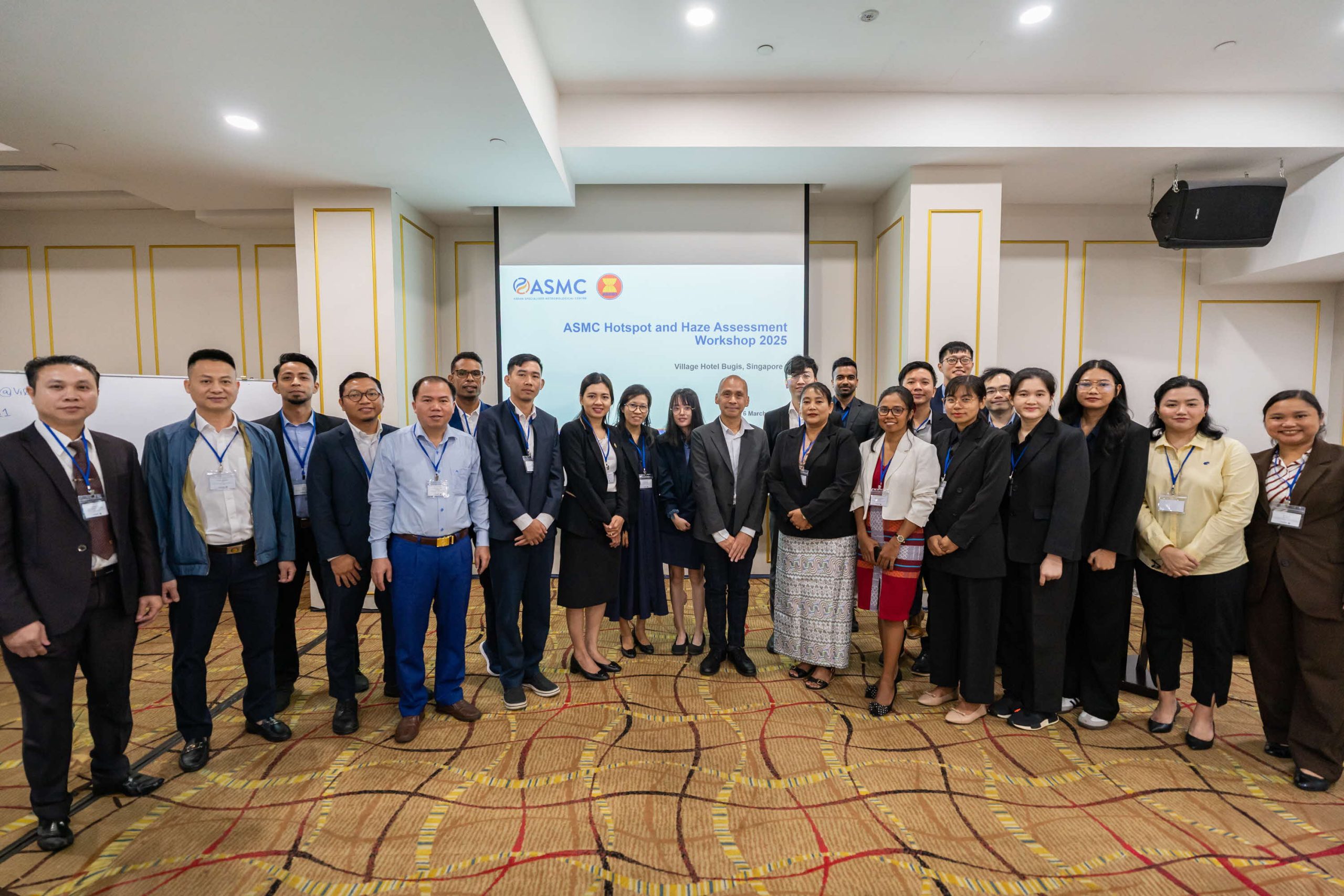
Figure 1: Group photograph of ASMC staff and participants of the 2025 H2A workshop.

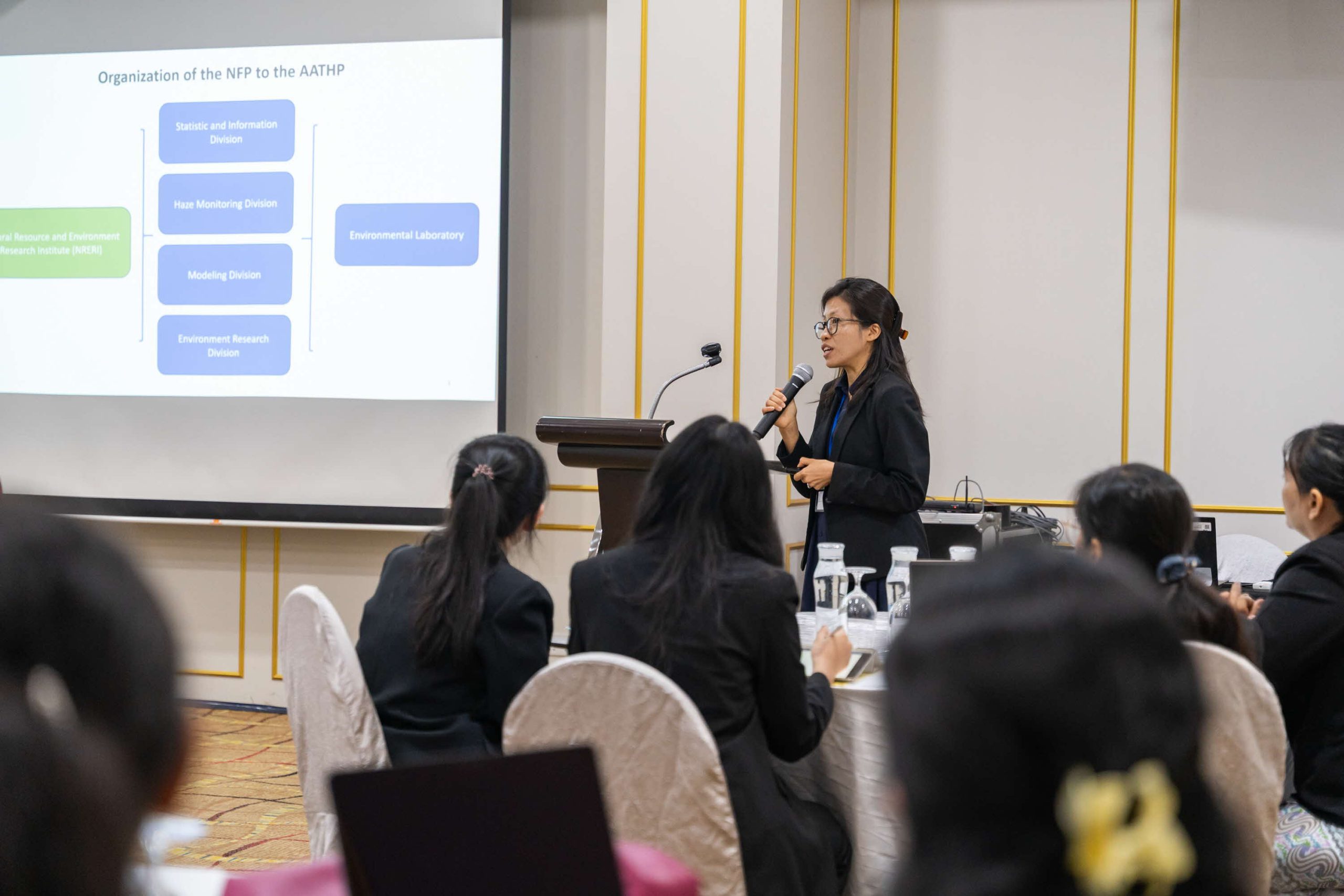
Figure 2: Participants’ sharing of local experience on fire and haze in their countries.

December 9, 2024

23nd ASEAN COF (November 2024)

Twenty Third Session of the ASEAN Climate Outlook Forum (ASEANCOF-23)

image_gallery

26-29 November 2024, Online

Consensus Bulletin for December-January-February (DJF) 2024/2025 Season

The ASEAN Climate Outlook Forum (ASEANCOF) is an avenue to collaboratively develop consensus-based seasonal climate outlooks and related information on a regional scale. The forum’s outlook and its activities contribute significantly to one of the key roles of the ASEAN Specialised Meteorological Centre (ASMC), which is to conduct climate and seasonal prediction for the Association of Southeast Asian Nations (ASEAN) region through pooling the expertise of ASEAN National Meteorological and Hydrological Services (NMHSs). In 2021, the ASEANCOF Working Group was established with the goal to guide and support the long-term development of ASEANCOF, in particular with regard to the implementation of objective outlooks.

The Twenty-third session of ASEANCOF (ASEANCOF-23) was organised by the Department of Meteorology and Hydrology of Lao PDR, RIMES, the ASEANCOF Working Group, and WMO. Participants from the NMHSs of ASEAN Member States created a consensus forecast for the boreal winter monsoon 2024/2025 in the ASEAN region. The consensus for the December-January-February (DJF) 2024/2025 outlook was achieved through an online session, which included presentations from ASEAN NMHSs, questionnaires, and discussions regarding the current climate conditions and predictions for Southeast Asia. The theme of ASEANCOF-23 was Agriculture and Climate Services. On the last day of ASEANCOF-23, a sharing session was held which included updates from ASEANCOF-22 around the use of climate services for agriculture.

image_gallery


Conditions and Outlook

Recent analysis of sea surface temperature (SST) anomalies over the equatorial Pacific shows average to slightly below-average SSTs across the equatorial Pacific Ocean, and along with atmospheric indicators such as trade wind strength and cloudiness, indicate La Niña-like conditions. In the Indian Ocean, the positive Indian Ocean Dipole did not develop, and based on the recent analysis, the SST anomalies show signs of a negative Indian Ocean Dipole.
The international climate outlooks predict that a weak La Niña is likely to develop sometime in December 2024 and persist until February 2025. After DJF 2024/2025, most models predict La Niña conditions to transition back to ENSO neutral.
There is a chance that a short-lived negative Indian Ocean Dipole (IOD) may be present during December 2024 based on the model predictions. However, the IOD is predicted to be neutral during January – February 2025.
The onset of the Northeast Monsoon season has been or is expected to be near or later than average for much of the northern ASEAN region. The onset for much of the southern ASEAN region has been or is expected to be near average. The strength of the Northeast Monsoon is predicted to be near average over most of Southeast Asia.
During DJF 2024/2025, tropical cyclone frequency is predicted to be near average around the Philippine Sea, the Bay of Bengal, and South China Sea.

RAINFALL

For the upcoming boreal (Northern Hemisphere) winter season (DJF 2024/2025):
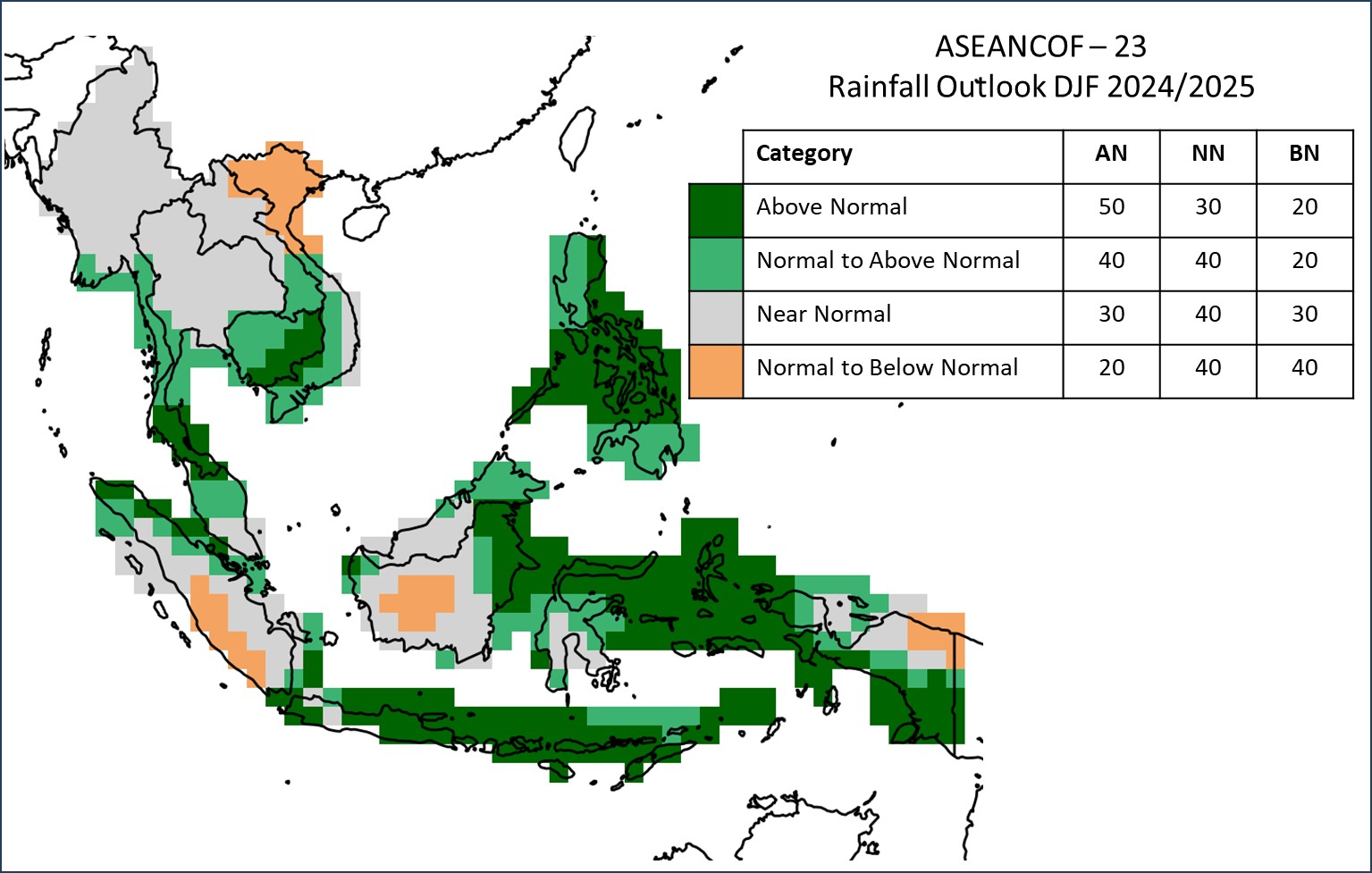
Over the Maritime Continent, near- to above-normal or above-normal rainfall is predicted for much of the region, including the Philippines, Brunei Darussalam, and Singapore. The exception is over parts of the equatorial region, where a mix of near-normal and normal- to below-normal rainfall is predicted.
Across Mainland Southeast Asia, near- to above-normal or above-normal rainfall is predicted for much of the southern part, including southern Myanmar, southern Thailand, Cambodia, southern Lao PDR, and southern Viet Nam. Below-normal rainfall is predicted for northern Viet Nam and elsewhere, near-normal rainfall is predicted.

Below-normal rainfall is predicted over the western part of Northern Philippines. Below- to near- normal rainfall is predicted over southern Lao PDR, the rest of Northern Philippines, and southernmost parts of Southeast Asia. Elsewhere, near-normal rainfall is predicted.1.

TEMPERATURE

For the upcoming boreal (Northern Hemisphere) winter season (DJF 2024/2025):
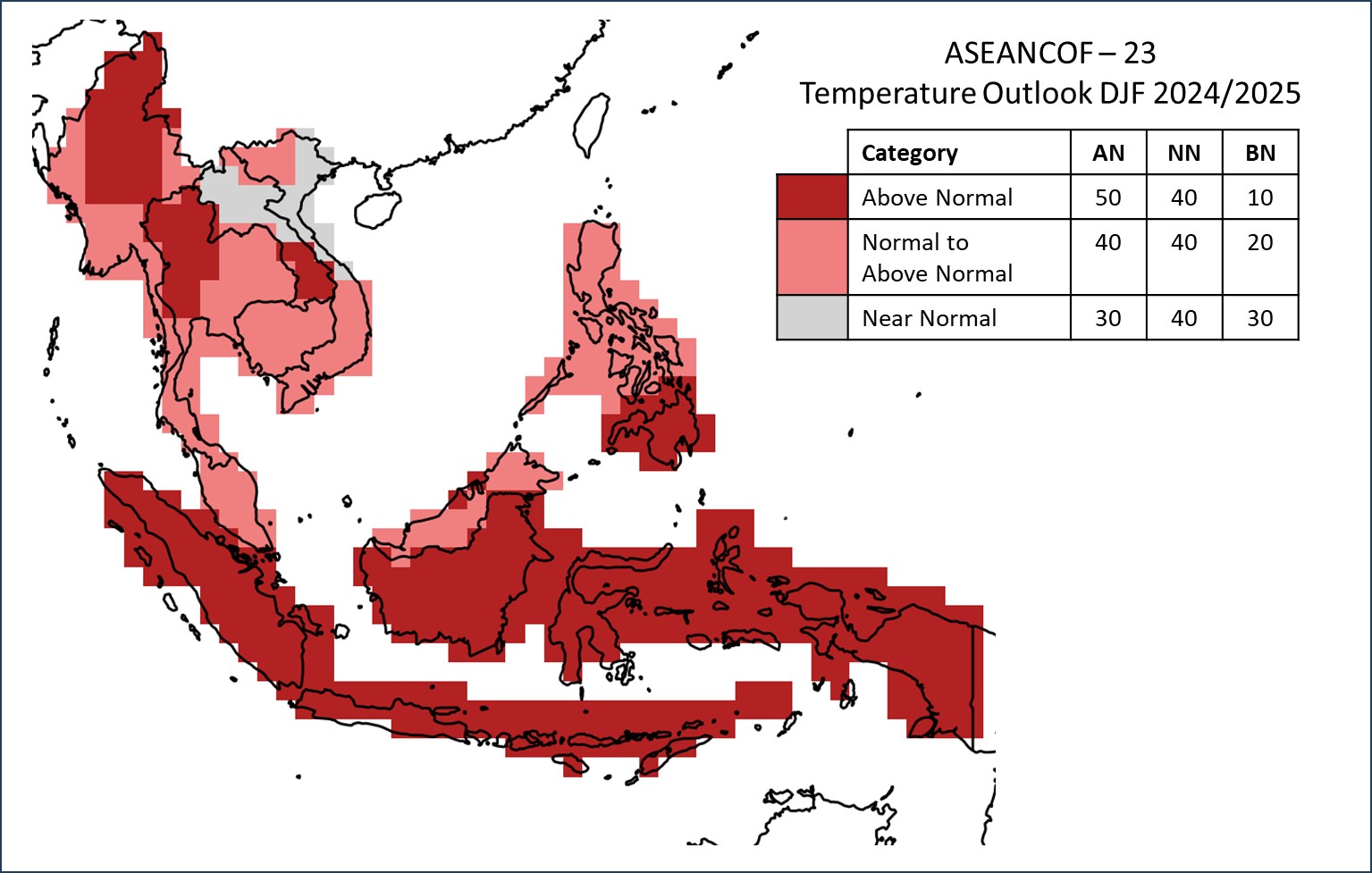
Near- to above-normal or above-normal temperature is predicted over most of the ASEAN region. The exception is over northern Lao PDR, and northeast and central Viet Nam, where near-normal temperature is predicted. The highest chance of above-normal temperature is over northern and central Myanmar, northern Thailand, southern Lao PDR, Singapore, the southern Philippines, and Brunei Darussalam.

1This is based on the climatology period 1991-2020. However, at the national level, Myanmar is using the 1981-2010 climatology as their base period.

Refer to Annex A for reference on what is meant by “above, near, or below normal” in the outlook. For more information on the boreal (Northern Hemisphere) summer monsoon outlook and further updates on the national scale, the relevant NMHSs should be consulted (see Annex B).

Consensus Maps for DJF 2024/2025 Season

The following maps provide the probabilistic outlooks for DJF 2024/2025 season in terms of tercile categories of “Above Normal” (AN: upper tercile), “Near Normal (NN: middle tercile) and “Below Normal” (BN: lower tercile).

PROBABILISTIC RAINFALL OUTLOOK

image007

PROBABILISTIC TEMPERATURE OUTLOOK

image008

Meeting Documents

ASEANCOF-23 Outlook Bulletin

Acknowledgements

ASEANCOF would like to convey its appreciation to the NMHSs of the ASEAN Member States for sharing their national level forecasts, the Global Producing Centres, the Southeast Asia Regional Climate Centre – Network, RIMES, UN ESCAP, and other partners of ASEANCOF for sharing their products and expertise, and the World Meteorological Organization Regional Office in Asia and the Southwest Pacific (WMO-RAP) for their continued support of ASEANCOF. The Forum would also like to thank DMH Lao PDR for hosting the forum virtually, as well as trainers from RIMES and UK Met Office.

October 9, 2024

ASMC-WMO Regional Forum 2024, 4 – 6 September 2024

ASMC-WMO Regional Forum 2024 (4 – 6 September 2024)

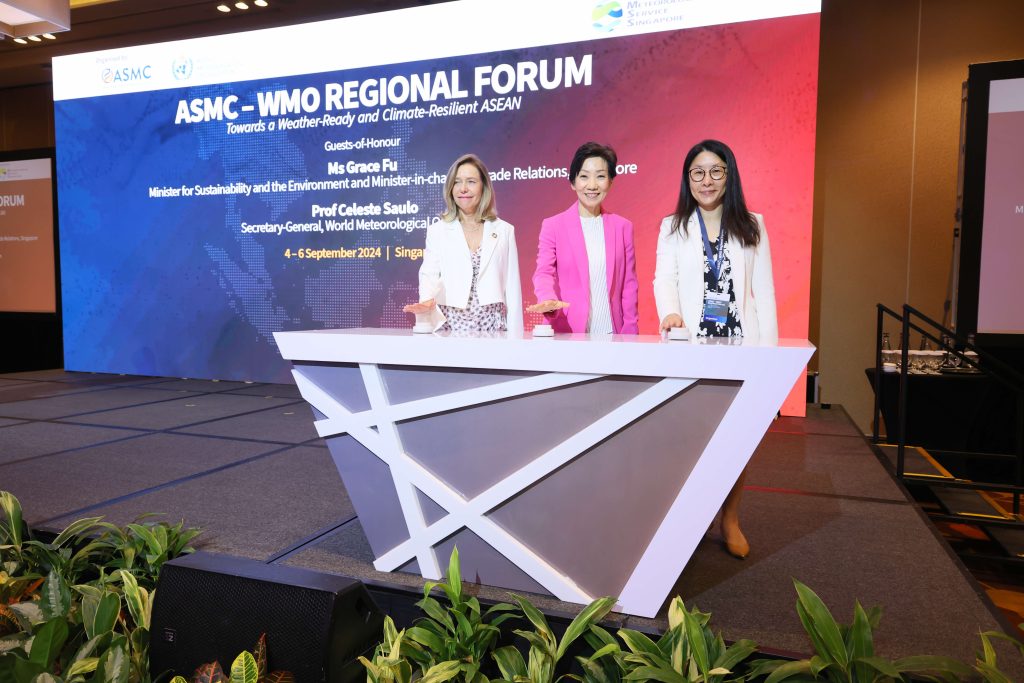
ASMC and WMO jointly organised the inaugural ASMC – WMO Regional Forum in Singapore, from 4 to 6 September 2024.  Titled “Towards a Weather-Ready and Climate-Resilient ASEAN”, the Forum brought together global, regional and national leaders and partners from across the climate services value chain to focus on how climate services, including high-resolution regional climate projections and early warning systems, can better support climate change adaptation and disaster risk reduction in Southeast Asia. The Forum also discussed how effective and inclusive early warning systems can mitigate the impact of extreme weather and climate events, especially in light of the Early Warnings for All (EW4All) initiative. Key highlights of the Forum included:

  • Deep dive into findings relevant to Southeast Asia from the 2023 WMO State of the Climate Reports for the South-West Pacific and Asia, with keynote address by Prof. Celeste Saulo, Secretary-General of the WMO and panel discussion on supporting ASEAN member states in translating climate information into actions.
  • Keynote presentations on climate change projections for Southeast Asia and the United Nations Early Warnings for All (EW4All) initiative
  • Technical Forums on Adapting to Climate Change in Southeast Asia, and Early Warning Systems as an Adaptive Measure: Panellists discussed about the current challenge and disaster riskscape in the Southeast Asia, the opportunity and on supports for NMHSs and ASEAN Member States in achieving EW4All.

The recordings on the presentations, panel discussions, the summaries from the World Café sessions, interactive group exercises and the regional forum can be accessed via link

August 22, 2024

Summary of the 4th Workshop on Subseasonal to Seasonal Prediction for Southeast Asia (S2S-SEA IV)

Summary of the 4th Workshop on Subseasonal to Seasonal Prediction for Southeast Asia (S2S-SEA IV)

August 2023, Singapore

The S2S-SEA IV workshop in August 2023, led by the ASMC and the Centre for Climate Research Singapore, marked the end of a four-part workshop series on Subseasonal-to-Seasonal (S2S) prediction in Southeast Asia. The workshop series aimed to build capacity and enhance collaboration among the National Meteorological and Hydrological Services (NMHSs) in the ASEAN region regarding S2S prediction. The fourth S2S-SEA Workshop included two virtual sessions (15 and 30 August) and an in-person segment between 22 and 24 August 2023, conducted in Singapore. Fifteen NMHS representatives from nine ASEAN Member States attended the in-person training, along with six trainers. Encompassing the in-person training, the two virtual sessions allowed more users to participate in the workshop, as well as more time for reflection in between the sessions. An additional 26 users and three trainers attended the virtual sessions, leading to a total number of 50 participants in SEA-SEA IV over the in-person and virtual sessions.

Key takeaways shared by the participants during the workshop included information on latest updates on sources of S2S predictability (including questions that are still unanswered), a better awareness of S2S products, and the procedure to give a S2S briefing to users (something NMHSs are not always trained in). The workshop also discussed the future of S2S predictions and plans for collaboration in the ASEAN region. Common challenges faced by NMHSs raised in the workshop include the need for improved communication, data access, and automation. Plans were made for fortnightly discussions between ASEAN NMHSs to review climate drivers and S2S outlooks.

Since the first workshop in 2017, many of the NMHSs in Southeast Asia have moved from research to delivering operational S2S products. While there is still more to do around delivering actionable products, discussions during the S2S-SEA IV highlighted that sharing experiences and expertise in the region is useful for the continued development of S2S predictions in Southeast Asia.

figure1

Participants during Virtual Sessions of the S2S SEA-IV workshop.


figure2

Group photo during the S2S-SEA Workshop, Singapore (in-person, 22-24 August 2023).


Workshop report

S2S SEA SIV report

June 5, 2024

22nd ASEAN COF (May 2024)

Twenty Second Session of the ASEAN Climate Outlook Forum (ASEANCOF-22)

image_gallery

27-30 May 2024, DMH Lao PDR

Consensus Bulletin for June-July-August (JJA) 2024 Season

The ASEAN Climate Outlook Forum (ASEANCOF) is an avenue to collaboratively develop consensus-based seasonal climate outlooks and related information on a regional scale. The forum’s outlook and its activities contribute significantly to one of the key roles of the ASEAN Specialised Meteorological Centre (ASMC), which is to conduct climate and seasonal prediction for the Association of Southeast Asian Nations (ASEAN) region through pooling the expertise of ASEAN National Meteorological and Hydrological Services (NMHSs). In 2021, the ASEANCOF Working Group was established with the goal to guide and support the long-term development of ASEANCOF, in particular with regard to the implementation of objective outlooks.

The Twenty-Second session of ASEANCOF (ASEANCOF-22) was organised by the Department of Meteorology and Hydrology of Lao PDR, RIMES, the ASEANCOF Working Group, and WMO. Participants from the NMHSs of ASEAN Member States created a consensus forecast for the boreal summer monsoon 2024 in the ASEAN region. The consensus for the June-July-August (JJA) 2024 outlook was achieved through a hybrid session, which included presentations from different NMHSs, questionnaires, and discussions regarding the current climate conditions and predictions for Southeast Asia. There was also two-day pre-COF training, conducted by the UK Met Office under the WISER Asia Pacific project and RIMES. The theme of ASEANCOF-22 was Agriculture and Climate Services, with a focus on drought. On the last day of ASEANCOF-22, a sharing session was held which included presentations from UN ESCAP, FAO, and WFP, as well as discussion on ways to improve ASEANCOF.

image_gallery


Conditions and Outlook

Recent analysis of sea surface temperature (SST) anomalies over the equatorial Pacific shows average to slightly below-average SSTs across the equatorial Pacific Ocean, and along with atmospheric indicators such as trade wind strength and cloudiness, indicate ENSO-neutral conditions. In the Indian Ocean, the Indian Ocean Dipole is also neutral.

The international climate outlook predicts that a La Niña is likely to develop sometime during JJA 2024. After JJA 2024, most models predict La Niña conditions to continue until the end of the year.
There is a chance that a weak positive Indian Ocean Dipole (IOD) may become established during JJA 2024 based on the model predictions. However, it is predicted to most likely be short-lived.

The onset of the Southwest monsoon season has been or is expected to be near average for much of Mainland Southeast Asia, apart from Thailand where the onset is later than average. The onset of the Southwest monsoon for much of the Maritime Continent has been or is expected to be near average. The strength of the Southwest monsoon is predicted to be near average over most of the Southeast Asia, based on model predictions.

During JJA 2024, tropical cyclone frequency is predicted to be below average around the Philippine Sea and the Bay of Bengal, and near average around South China Sea.

Taking into consideration the national level forecasts, the present state of the climate, and the forecasts available from the GPCs, ASEANCOF-22 agreed on the following consensus-based outlook for JJA 2024 over the ASEAN region:

RAINFALL

Above-normal rainfall is predicted over northern Myanmar, parts of Cambodia and parts of the equatorial region, including Brunei Darussalam and middle part of East Malaysia. Near- to above-normal rainfall is predicted over southern Thailand, western part of East Malaysia, and the southern Philippines, as well as parts of Mainland Southeast Asia including western Myanmar, northwestern Lao PDR, parts of Cambodia, and southern Viet Nam.

Below-normal rainfall is predicted over the western part of Northern Philippines. Below- to near- normal rainfall is predicted over southern Lao PDR, the rest of Northern Philippines, and southernmost parts of Southeast Asia. Elsewhere, near-normal rainfall is predicted.1.

TEMPERATURE

Above normal temperature is predicted over most of Southeast Asia, apart from over much of Myanmar, Lao PDR, Cambodia, Brunei Darussalam, and the Philippines where near- to above-normal temperature is predicted.

1This is based on the climatology period 1991-2020. However, at the national level, Myanmar is using the 1981-2010 climatology as their base period.

Refer to Annex A for reference on what is meant by “above, near, or below normal” in the outlook. For more information on the boreal (Northern Hemisphere) summer monsoon outlook and further updates on the national scale, the relevant NMHSs should be consulted (see Annex B).

Consensus Maps for JJA 2024 Season

The following maps provide the probabilistic outlooks for JJA 2024 season in terms of tercile categories of “Above Normal” (AN: upper tercile), “Near Normal (NN: middle tercile) and “Below Normal” (BN: lower tercile).

PROBABILISTIC RAINFALL OUTLOOK

image007

PROBABILISTIC TEMPERATURE OUTLOOK

image008

Meeting Documents

ASEANCOF-22 Outlook Bulletin

Acknowledgements

ASEANCOF would like to convey its appreciation to the NMHSs of the ASEAN Member States for sharing their national level forecasts, the Global Producing Centres, the Southeast Asia Regional Climate Centre – Network, RIMES, UN ESCAP, FAO, WFP, and other partners of ASEANCOF for sharing their products and expertise, and the World Meteorological Organization Regional Office in Asia and the Southwest Pacific (WMO-RAP) for their continued support of ASEANCOF. The Forum would also like to thank DMH Lao PDR for hosting the forum, with support from RIMES, and CREWS Cambodia and Lao PDR and WISER Asia Pacific for the funding support provided for the meeting.